Ask five CRO agencies what they cost and you will get five versions of it depends. It does depend. That is not a reason to hide the numbers, so here are the real ranges we see quoted in the market, what moves a quote inside its range, and the arithmetic for deciding whether an agency beats hiring, because sometimes it does not.
One disclosure first: we sell some of these services, so read this as a supplier writing about its own market. Everything below is what the market quotes, not our rate card, and the section on when not to pay anyone applies to us too.
Why the opacity in the first place? Partly because scope genuinely varies, and partly because hidden pricing is a qualification strategy: if you have to book a call to learn the number, the agency gets a pitch before you get a fact. We think the habit costs the industry more trust than it earns in meetings, which is one reason the ranges below exist on a public page.
The three pricing models and their real ranges
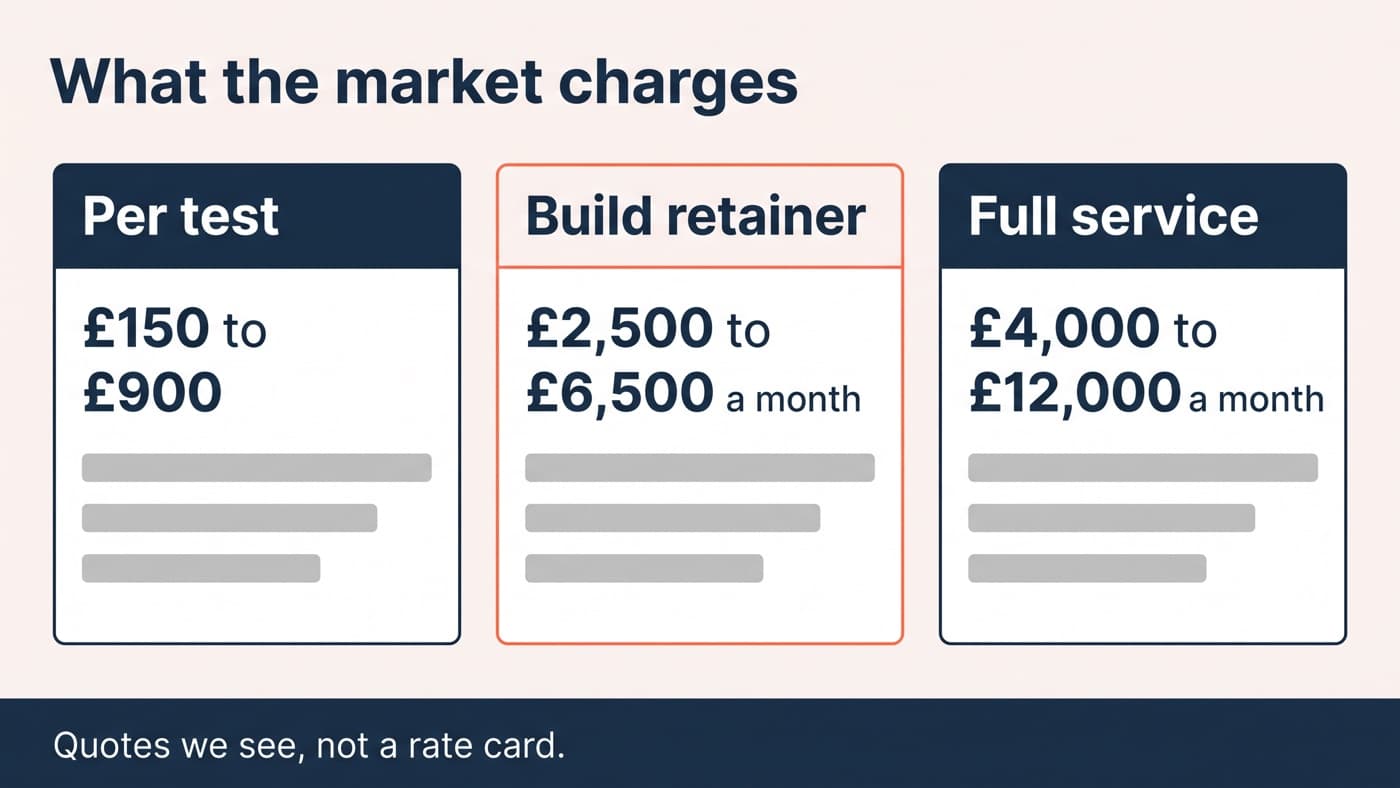
- Per test. Roughly £150 to £900 per client-side build in the quotes we see, with server-side and checkout work above that. Suits occasional needs and pilots; the meter running on every idea quietly discourages testing volume.
- Build retainer. Roughly £2,500 to £6,500 a month for reserved development capacity alongside your own strategist. The workhorse model for brands with a steady backlog; the per-build economics beat per-test pricing once volume is real.
- Full service. Roughly £4,000 to £12,000 a month for strategy, research, build and analysis together. The right shape when nobody internal owns conversion; the wrong one when you are paying strategy prices to rent hands.
Hourly rates exist underneath all of this, but they are the least comparable number in the market, spanning an order of magnitude by geography and seniority, so we deliberately leave them out of the ranges above. Performance-based pricing exists too; treat it with the caution the FAQ below spells out, because it puts the measurement and the incentive in the same hands.
What actually moves a quote
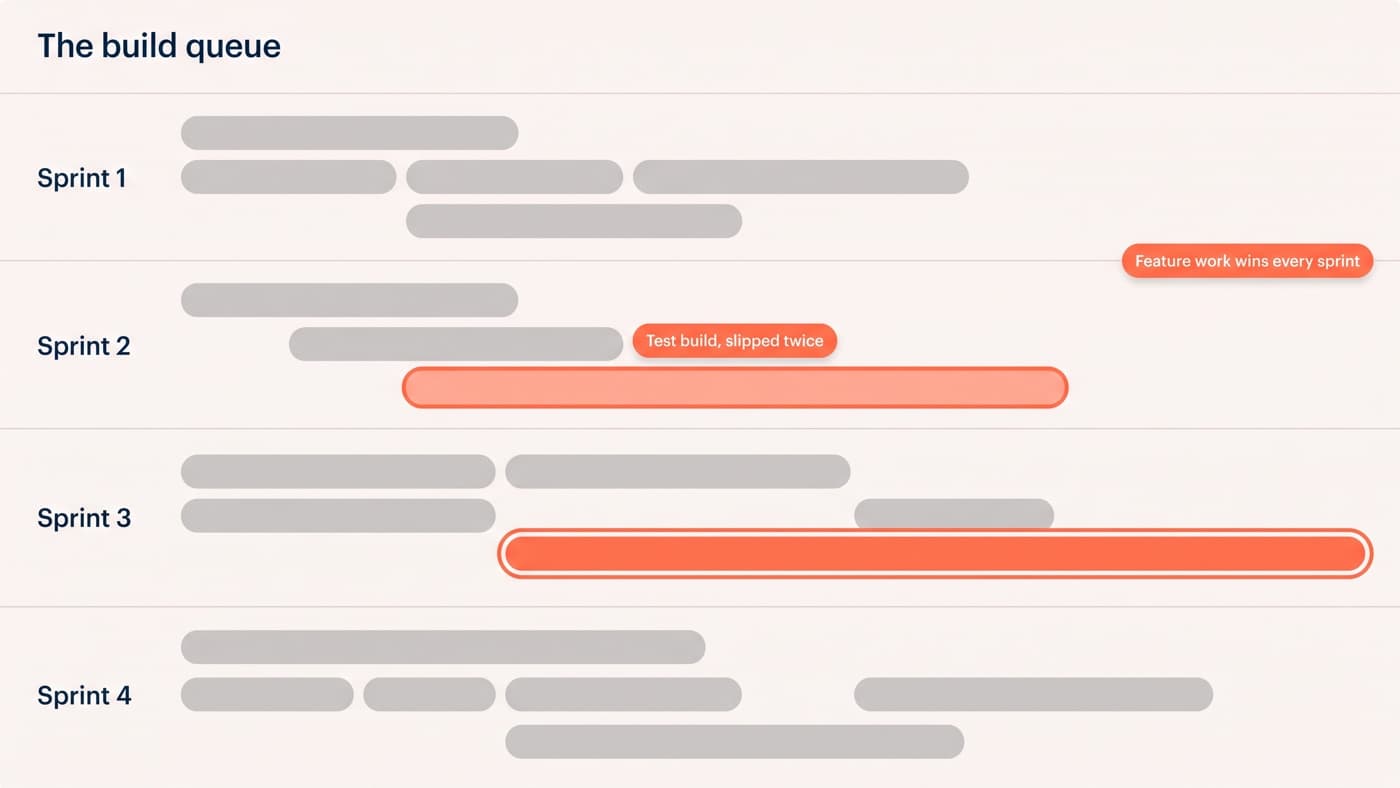
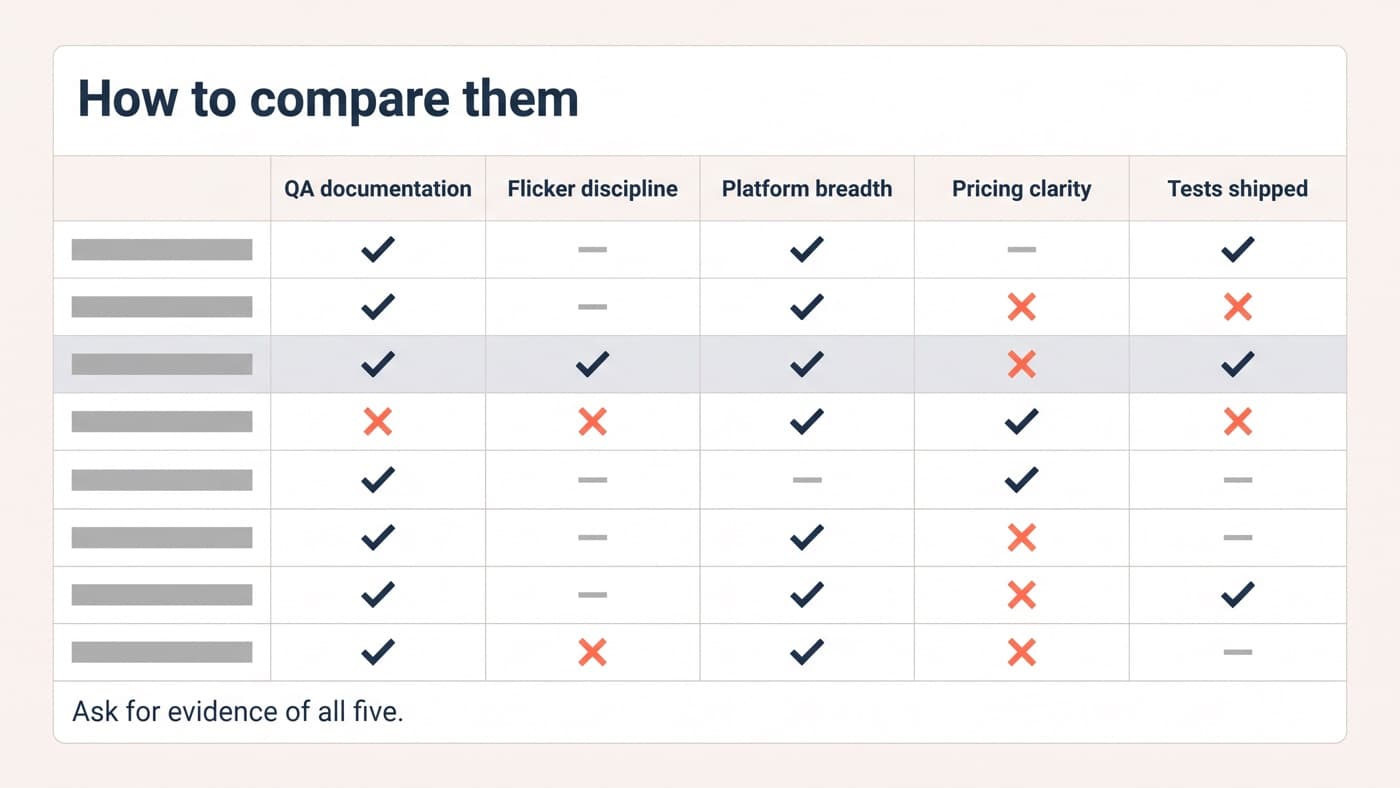
Four things, in descending order of weight. Velocity: reserved parallel capacity costs more than a queue slot. Complexity: a template swap and a server-side pricing experiment are different products wearing the same word test. QA depth: documented cross-browser and tracking validation is real hours, and its absence in a cheap quote is where the discount comes from. And platform: unusual stacks and page-builder themes carry a complexity tax every honest scoper prices in. The market context for all of this sits in our wider guide to CRO development.
The costs that never appear in the quote
Three of them, and they surprise every first-time buyer. The testing tool licence is almost never included: platforms run from a few hundred to several thousand pounds a month on their own, and an agency quote that looks cheap may simply have moved the software onto your card. Winner implementation is the second: some shops quote the experiment and charge separately to ship the winning code into your theme, which is precisely the step that makes the win permanent. And your own time is the third. Reviewing briefs, approving designs and answering questions is real hours from someone senior, and a partner who needs none of your time is a partner guessing about your customers.
So compare quotes on the full sentence, not the headline: what does one shipped, QA-documented, implemented, honestly analysed experiment cost, all in? Asked that way, the spread between vendors narrows dramatically, and the remaining gap is usually explained by QA depth, which is the part you want to pay for.
Agency against hiring: the actual arithmetic
Price a year of testing three ways at 24 builds a year, mid-range quotes. Per-test at £600 a build: about £14,400, plus your time doing QA and analysis. A build retainer at £3,500 a month: £42,000, with QA and implementation inside. An in-house CRO developer: around £72,000 all-in for salary and overhead at UK rates, and you still need analysis and design around them.
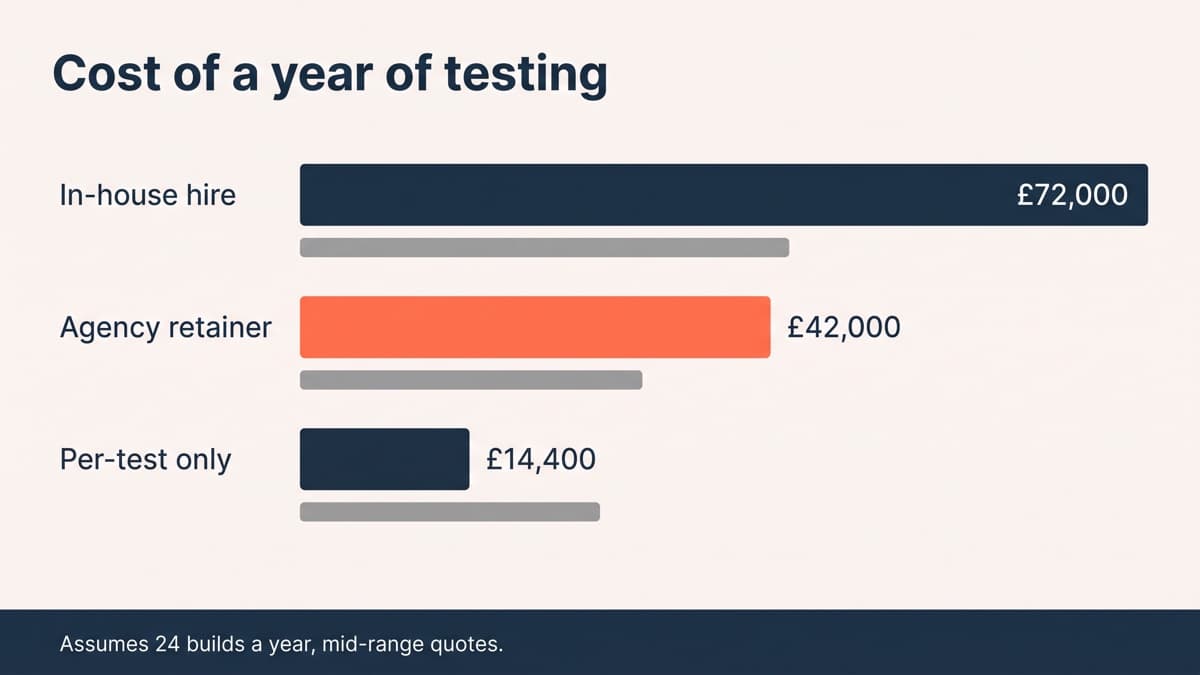
The comparison flips with volume. At a handful of tests a year, per-test pricing wins and everything else is overhead. At 15 or more tests a month, sustained, the in-house hire starts beating any retainer, which is exactly the threshold our outsourcing guide draws in more detail. Between those poles, which is where most DTC and mid-market brands live, reserved capacity usually wins on cost per shipped, QA-passed experiment, which is the only unit worth pricing.
The hiring number also hides its own risks, which the salary line never shows: a six-month ramp before full productivity, a single point of failure who can resign the week before peak, and the quiet reality that one developer alone still lacks the analyst and designer around them. None of that makes hiring wrong. It makes the £72,000 an entry price rather than a total, which is how it should be compared.
When not to pay anyone
Below roughly 50,000 monthly sessions, formal testing gets slow enough that most agencies cannot deliver readable results at a defensible price, whatever the deck says. Fix the obvious usability problems, spend on traffic and product, and come back to testing when the denominator supports it. The same honesty applies to any store where results die in a backlog: an agency finding wins nobody implements is the most expensive way to be right that money can buy.
Two smaller disqualifiers worth naming. If the store has a known, large, unfixed defect, a broken mobile checkout, a six-second homepage, pay to fix that before paying anyone to experiment around it. And if the motivation is a boardroom desire to be doing CRO rather than a specific commercial question, save the retainer: programmes bought as a status symbol produce dashboards, not revenue.
Whatever you buy, insist the quote arrives itemised: builds, QA standard, analysis ownership, code ownership, exit terms. A number without its contents is not a price; it is a mood. If you want your own traffic and backlog run through this arithmetic honestly, including the answer that you should not hire us yet, get in touch and bring the numbers.