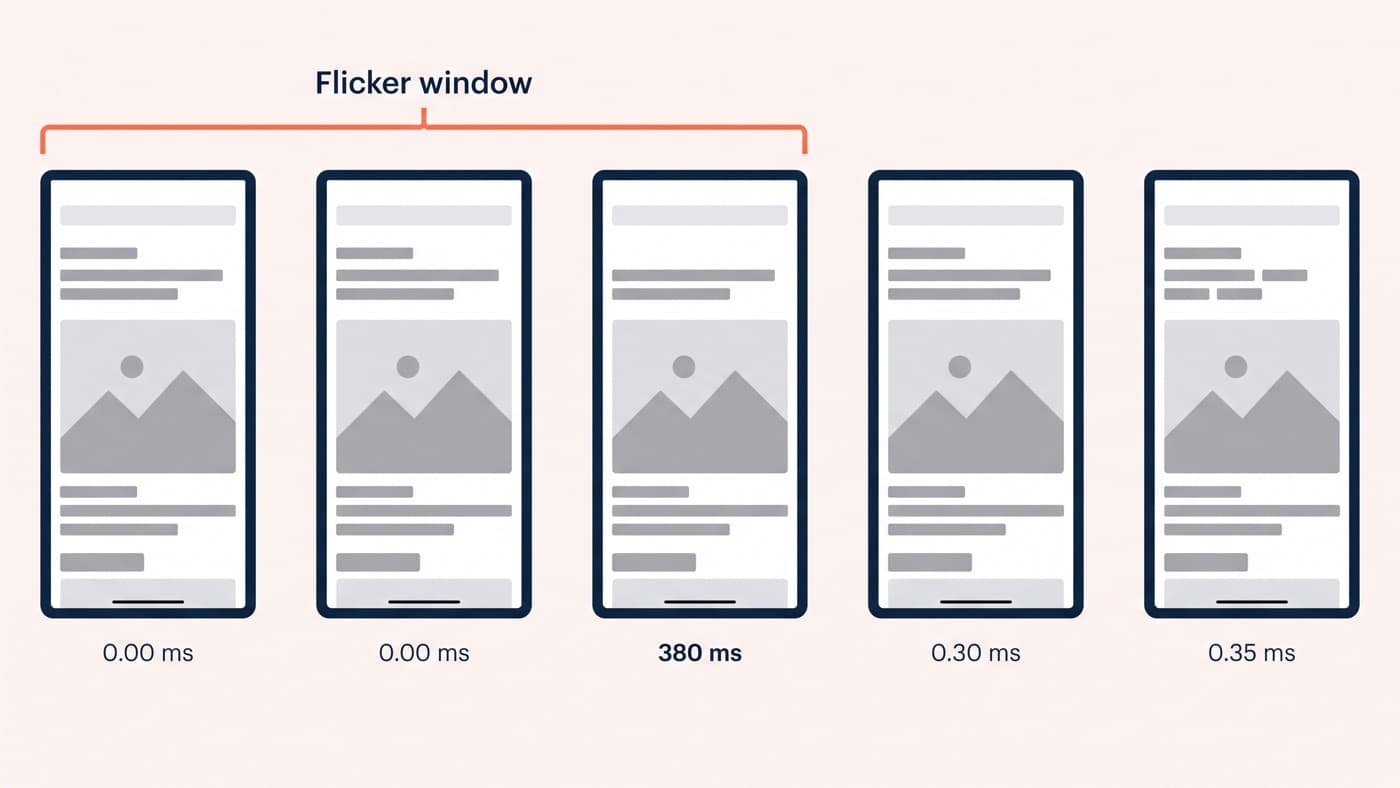
Every millisecond of flicker is a thumb on the scale against your variation. We have rebuilt flickering tests, rerun them unchanged in every other respect, and watched a loser become a winner: one collection-page test that lost by 5% at 380 ms of flicker came back at plus 6% once the flash was gone. The idea had been right the whole time. The build was voting against it.
Flicker, or FOUC, is defined in a sentence in most tool documentation and then treated as a cosmetic annoyance. It is not cosmetic. It is the only defect in client-side testing that penalises exactly one arm, which makes it the most efficient way to draw a false conclusion that money has yet invented.
What the visitor actually sees
A client-side test runs after the browser has already painted something. The original headline, hero image or price block appears, the testing script executes, and the variation replaces it. On a fast desktop connection that whole sequence can complete inside 50 ms and nobody perceives it. On a mid-range Android phone on a congested mobile network, with a theme carrying a dozen app scripts ahead of yours in the queue, the same sequence takes 300 to 500 ms, and 380 ms is long enough to read a headline, register a price, and start moving your thumb toward a product you were already going to tap.
The visitor does not think "flicker". They register a page that jumped, and a page that jumps feels broken in a way people do not articulate but do act on. Some abandon. Some scroll past the element while it is still moving. Some simply trust the store fractionally less, which is not a metric you can instrument but is absolutely a thing that happens.
Why it biases against the variation specifically
This is the part that gets missed. Flicker does not add noise, it adds a one-sided cost. Control visitors see one page, once, cleanly. Variation visitors see two pages in quick succession, and pay for the second one in perceived instability and occasionally in real layout shift. So the variation is not being compared with the control on the merits of its idea; it is being compared while carrying a handicap that the control never wears.
The size of that handicap is easy to underestimate, because most winning tests in ecommerce move a primary metric by single-digit percentages. A penalty large enough to shave a couple of percent off the variation arm is therefore large enough to turn a genuine 6% winner into a flat result, or a flat result into an apparent loss. Worse, the penalty is heaviest on slow connections and older devices, which means it lands unevenly across your audience and can produce a mismatch in the split itself when bounces outrun the analytics event. That failure mode has its own diagnosis in our post on sample ratio mismatch.
The causes, in the order they are usually to blame
Flicker looks like one problem and is usually one of five, and they are not equally common:
- The snippet is loaded asynchronously, or through a tag manager, so it arrives after the page has painted. This is the single most frequent cause and the easiest to fix.
- The variation code is too heavy to apply in one pass, because it waits on a framework, an image or a network request before it can change anything.
- The variation targets elements that do not exist yet, so it polls the DOM and applies its changes several hundred milliseconds after the element finally appears.
- App and theme scripts ahead of the testing snippet monopolise the main thread, delaying the swap without any of the testing code being slow in itself.
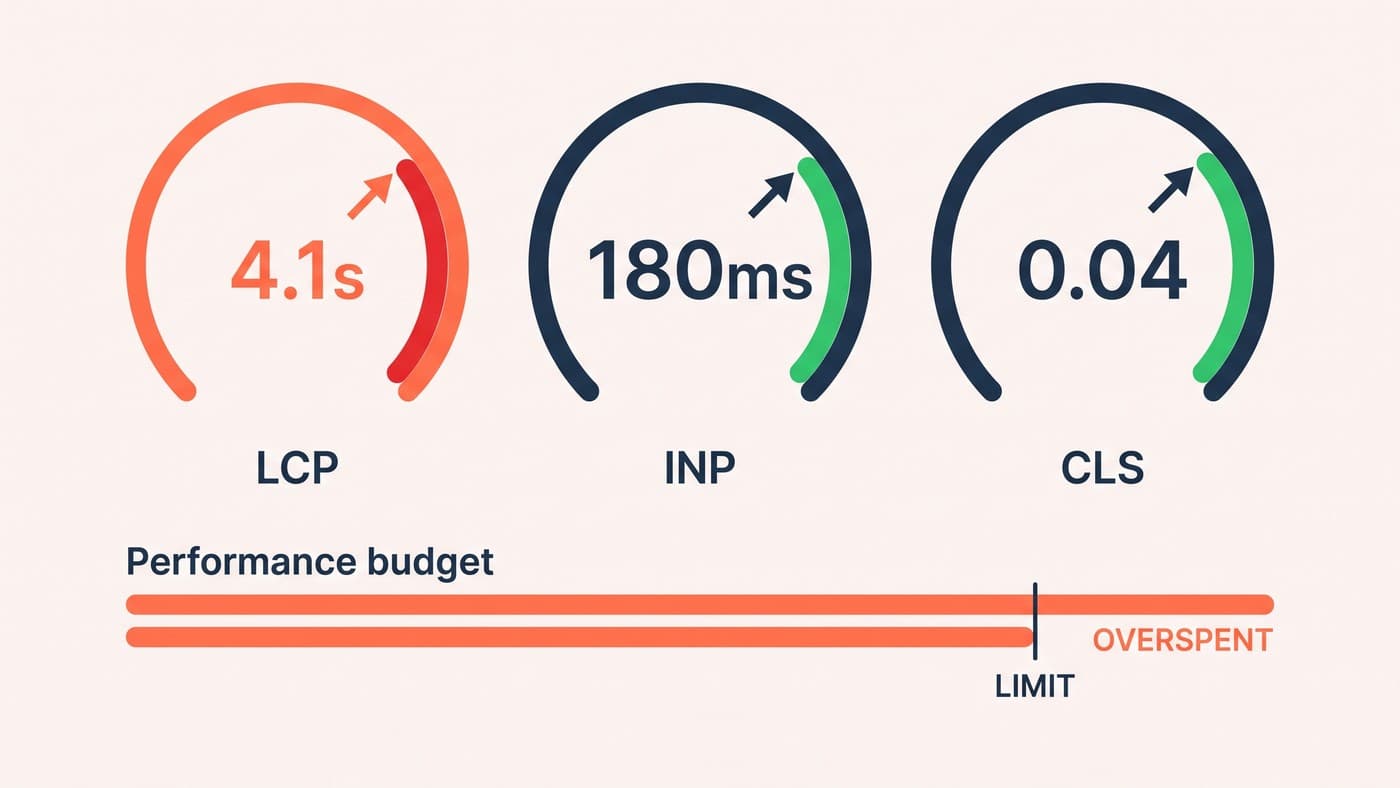
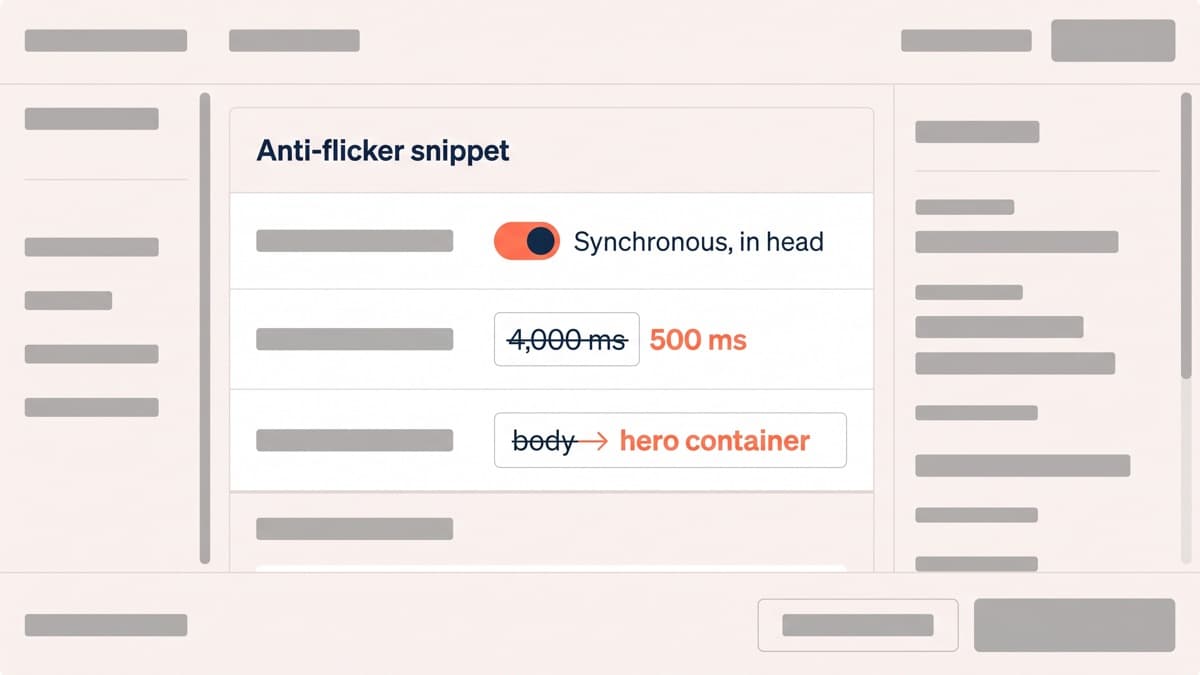
- The anti-flicker snippet is misconfigured: hiding the entire body, or holding it for a four-second default timeout, which trades a visible flash for a visibly blank page.
Fixing it, in order of preference
Start with placement, because it is free. The testing snippet loads synchronously in the head, before stylesheets and before every app script, never through a tag manager that resolves whenever it feels like it. Then make the variation cheap: write plain CSS and DOM changes that can execute in the first paint, and avoid anything that must wait for a network response. Then narrow the anti-flicker selector so you hide the hero container rather than the whole document, and cut the hide timeout from the four-second default most tools ship with to something under one second. A curtain that outlives the swap is not a fix, it is a page-speed regression wearing a fix as a costume, and the same trade-offs are covered in our guide to Shopify page speed.
Then measure rather than assume. Record the load on a throttled connection on real hardware and step through the frames until you can state the flicker window in milliseconds. "Looks fine on my machine" is how a 380 ms flash reaches production, because on the machine in question it was 40 ms. Do it on both arms, too: the control should be measured the same way, so that any difference in perceived load between the two is a number you have rather than an argument you are having.
One thing not to do is fix flicker by weakening the variation. It happens more often than anyone admits: the change is trimmed until it applies fast enough, and what ships is a diluted version of an idea that was never actually tested. If the variation is too heavy to render cleanly, that is a signal about where the test belongs, not an invitation to test something smaller and pretend it answered the question.
When the answer is not a better snippet
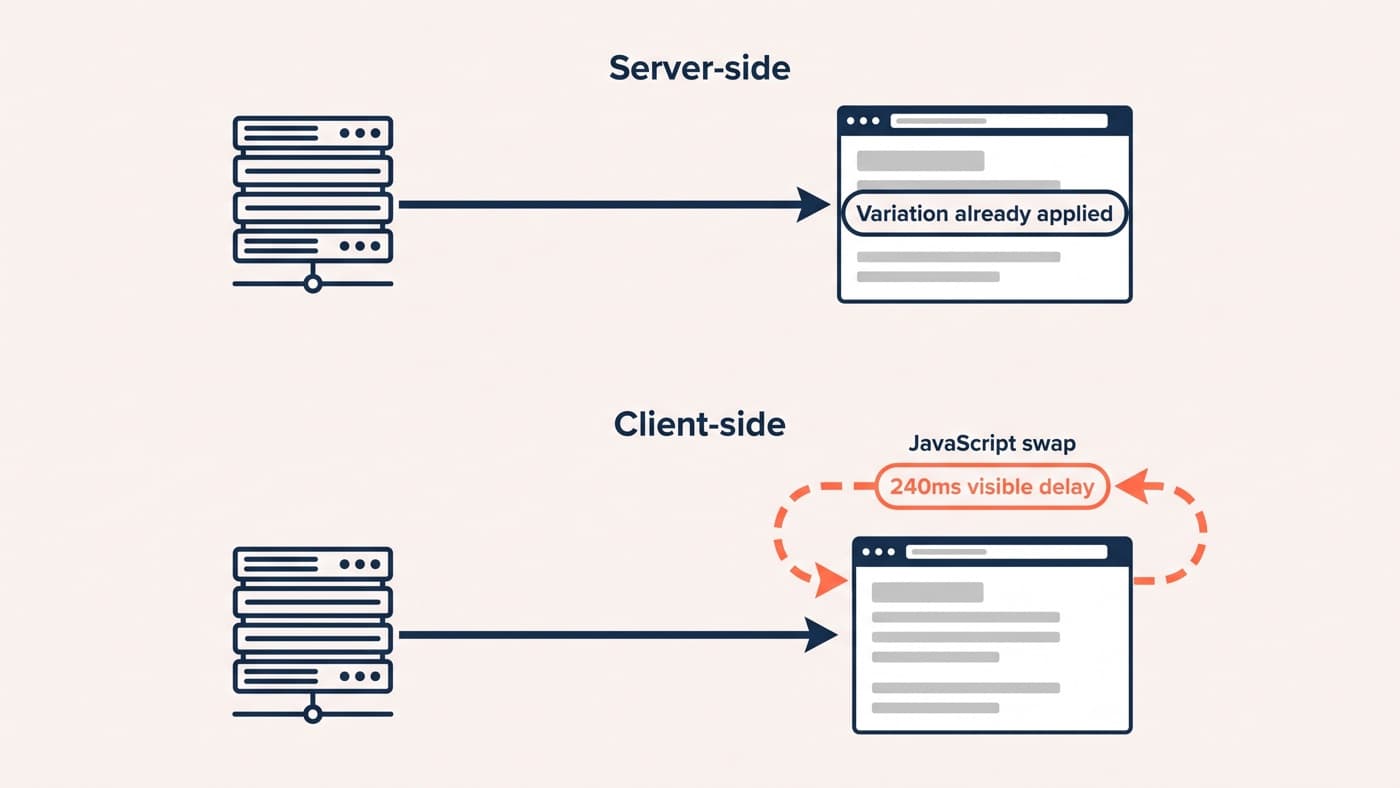
Some tests should never have been client-side. If the variation changes price, cart logic, search ranking or anything above the fold on a template where the first paint is the whole experience, no amount of snippet tuning removes the fundamental problem: you are asking the browser to undo work it has already done. Rendering the variation on the server removes flicker by construction rather than by configuration, at the cost of real engineering and a deploy cycle, and the server-side versus client-side decision is worth making deliberately rather than inheriting from whoever set the tool up.
The uncomfortable conclusion is that a flickering test is not a weak result, it is a void one, and reruns cost weeks. Build quality is not a detail of experimentation, it is most of it, which is why we treat variation engineering as a craft with its own standards. If you have results you no longer trust and a suspicion about why, send them over.