We build and test stores on both platforms, which makes this comparison unusual: it is not written by a theme vendor, a hosting affiliate or an agency that implements only one side. Shopify versus WooCommerce is usually argued on features and philosophy. Here it is compared on the only metric that pays your bills, which is how often visitors become customers.
The conversion-only frame
Strip the spec sheets away and conversion cares about five things: how fast pages load on a mid-range phone, how good the checkout is, how much weight apps and plugins add, how easily you can run honest experiments, and how the mobile experience holds together. Everything else in the platform debate, admin ergonomics, multichannel features, the size of the app store, is real, but it is not conversion.
One rule for what follows: the numbers are what we measure on real builds, not platform laws. Both platforms contain fast and slow stores, high and low converters, and the variance inside each platform is wider than the gap between them. What a comparison can honestly describe is floors, ceilings and defaults, which is what this one does. Where a number below looks tidy, treat it as a shape rather than a promise; your store will produce its own.
Where Shopify converts better
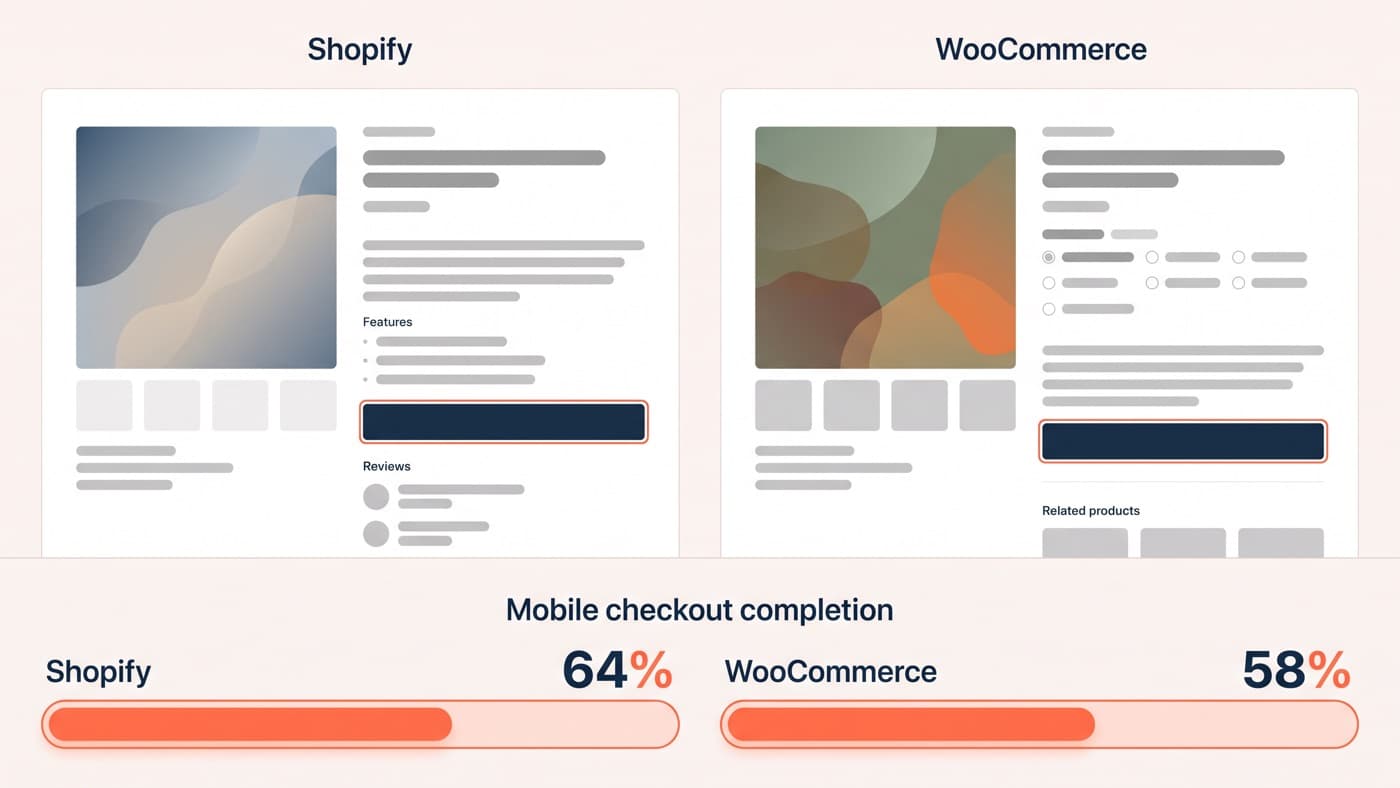
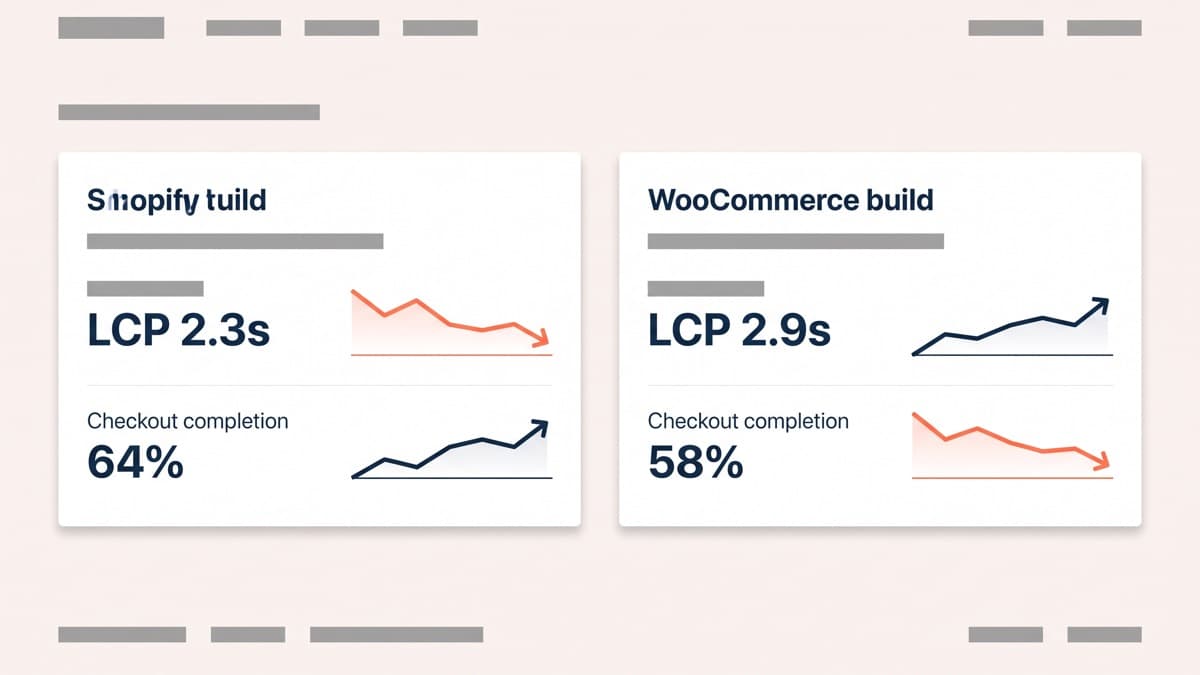
The checkout is the strongest argument. It is hosted, relentlessly optimised, and carries Shop Pay, whose stored credentials turn a form-filling task into two taps. Across paired builds we consistently see mobile checkout completion several points higher on Shopify: a 58% versus 64% shape is common, and completion is where mobile funnels go to die. Express wallets follow the same pattern, since Apple Pay and Google Pay arrive configured, while a WooCommerce build earns them through gateway work someone has to do on purpose. WooCommerce checkouts can be excellent, but each one is excellent by individual effort. Shopify’s is excellent by default.
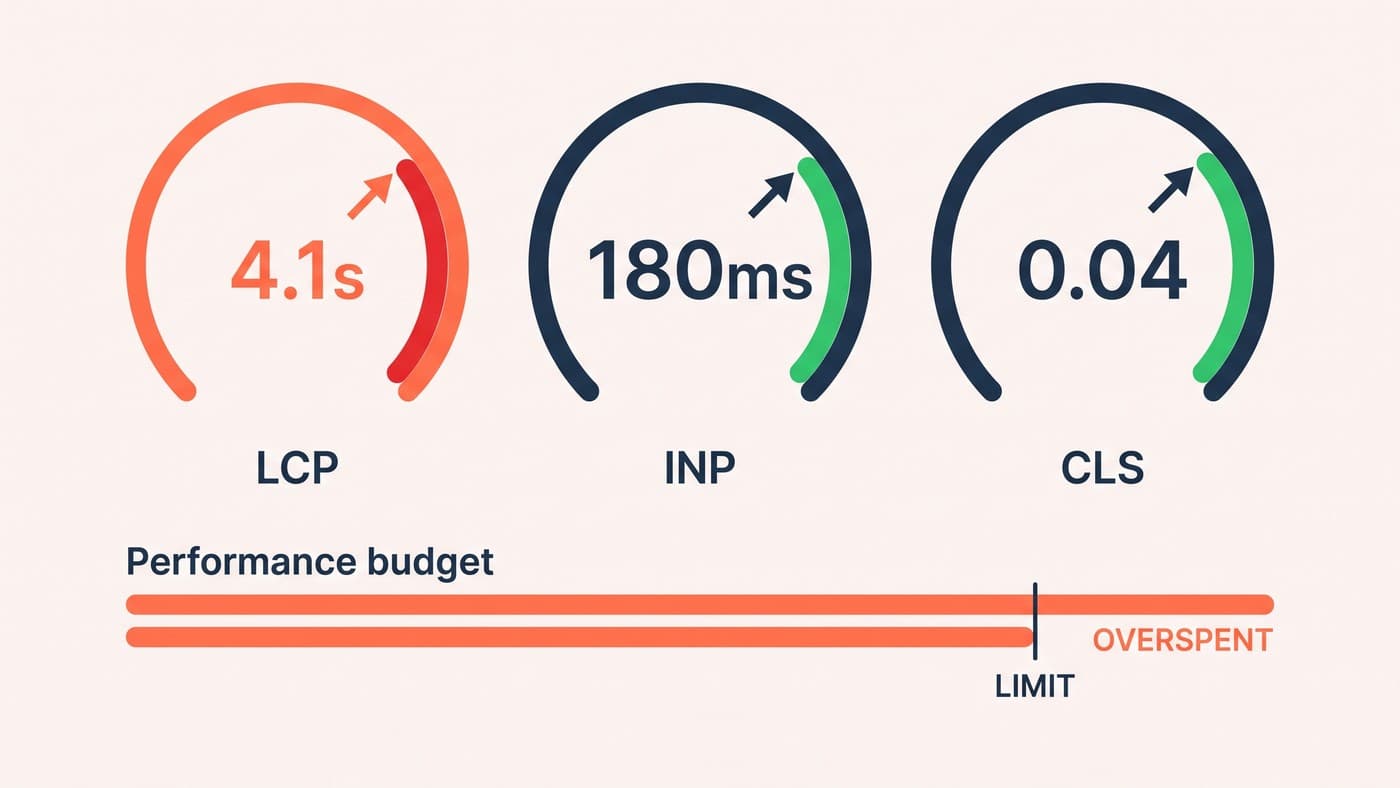
The second advantage is the speed floor. Hosting is uniform, the CDN is included, and the worst case is bounded in a way a neglected WooCommerce install, thirty plugins deep on shared hosting, is not. In one recent paired comparison, largest contentful paint measured 2.3 seconds on a well-built Shopify theme against 2.9 seconds on the WooCommerce site it replaced, with no heroics on either side. The more telling number: the WooCommerce site’s spread between its fastest and slowest templates was wider than the gap between the two platforms.
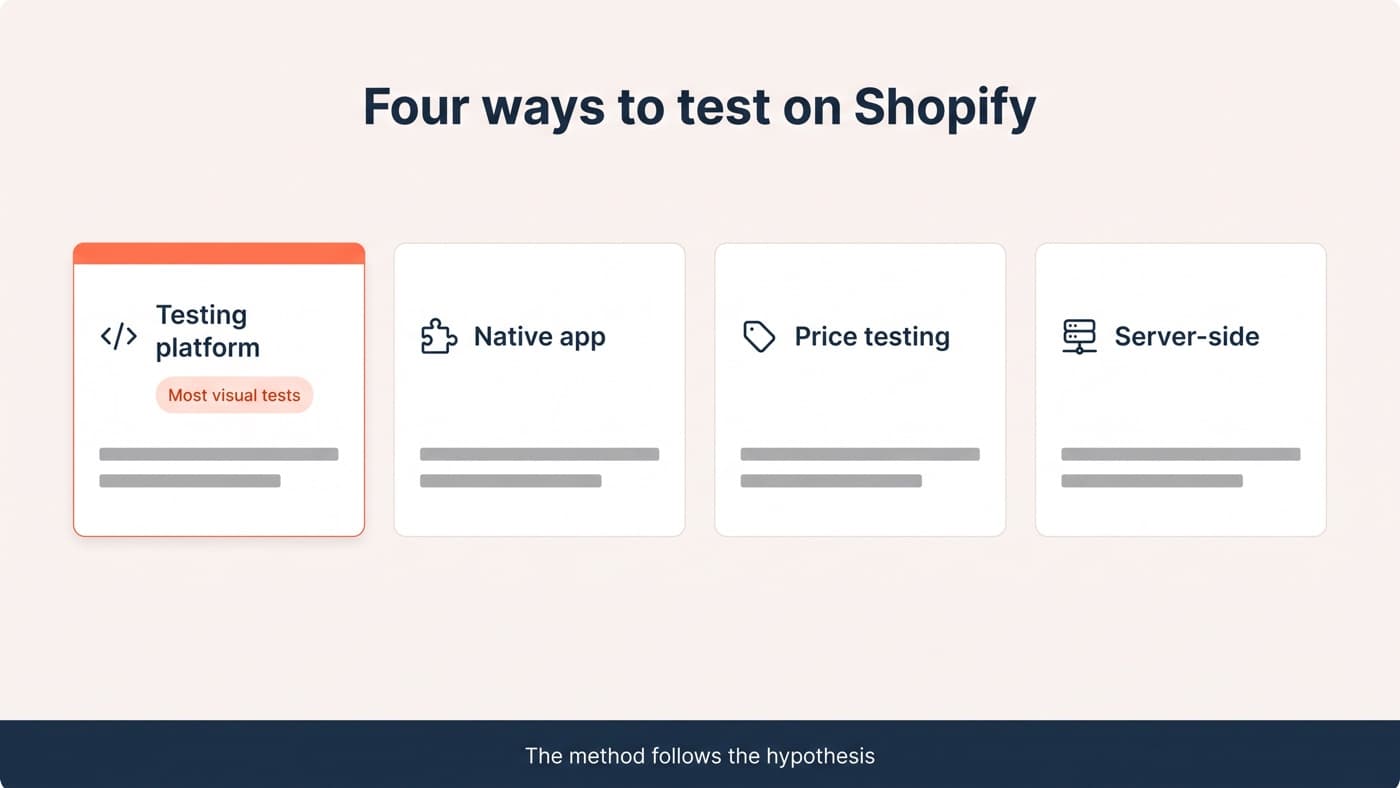
Testing is the third, quieter edge. Because Shopify stores share structure, experiment tooling behaves predictably and test builds transfer between projects; the four ways to run experiments on the platform are mapped in our Shopify A/B testing guide. On WooCommerce every store is its own small platform, so test builds are bespoke and the QA matrix is wider.
The price of all three is rigidity. Below Plus, the checkout is barely customisable, and even Plus has walls. That constraint is annoying precisely because it is load-bearing: the checkout stays fast and trustworthy because merchants cannot improvise on it.
Where WooCommerce wins
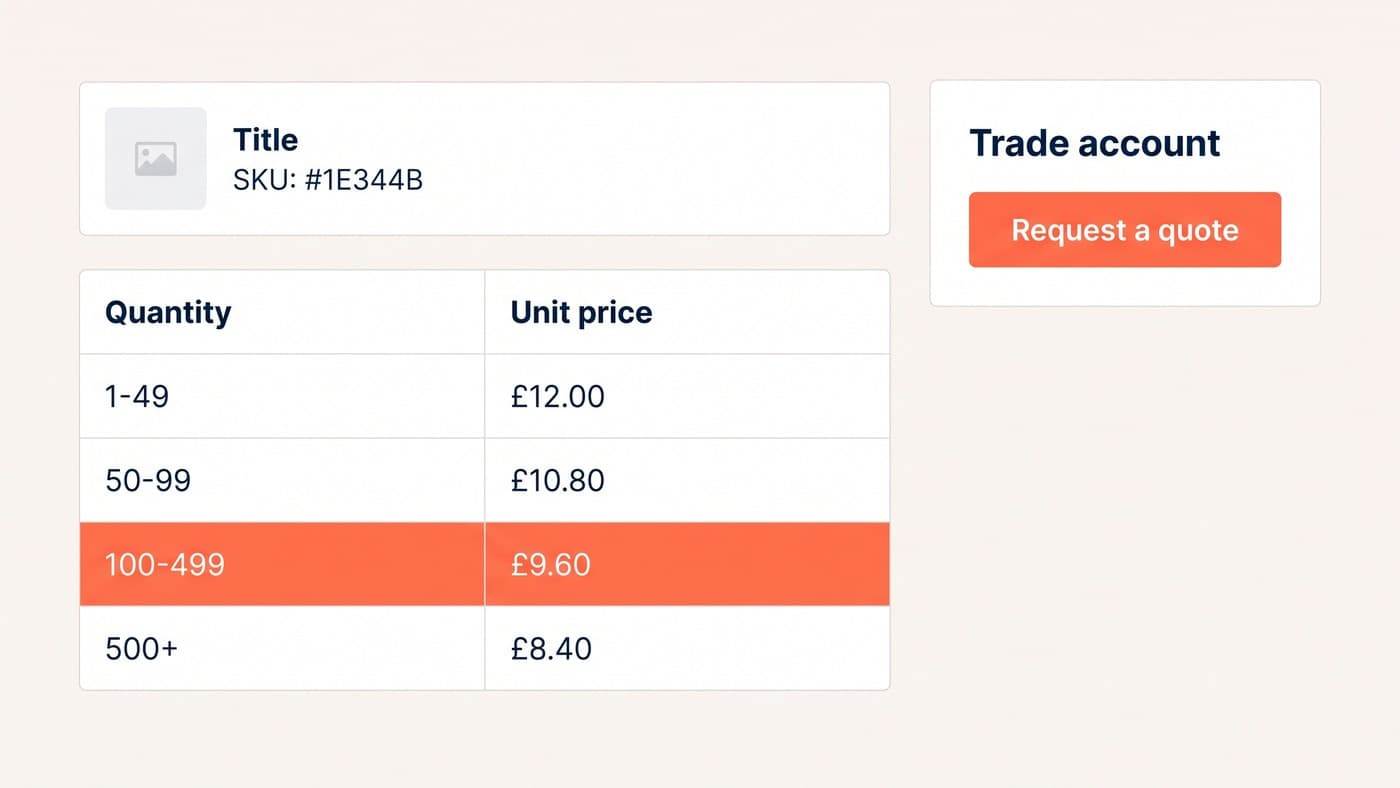
B2B is the clearest case. Quantity-break pricing, customer-group rates, quote requests and trade-account approval are patterns WooCommerce handles natively or with mature plugins, and that Shopify pushes into app subscriptions that never quite fit; our guide to WooCommerce trade accounts covers how deep that goes. If your buyers order in fifties against a purchase order, WooCommerce converts better because it already speaks their language.
Content-commerce is the second. Stores whose funnel starts with editorial, recipes, guides and comparison content, sit naturally on WordPress, where the publishing toolchain is the best in the business and the store lives beside the content rather than bolted onto it. And cost control at the margins is real: no additional transaction fees on top of the gateway, no app rent for every capability, and full ownership of every line of the stack for teams with the engineering to use it.
The pattern behind both wins is ownership. WooCommerce grants capabilities Shopify sells or refuses, and every one of them arrives with a maintenance obligation attached. The stores where WooCommerce converts best are, without exception, the ones where somebody owns that job properly.
The migration question
Migrating WooCommerce to Shopify for conversion alone is justified less often than agencies imply. It makes sense when the checkout numbers are structurally bad, mobile completion stuck in the low fifties while everything upstream looks healthy, and the plugin debt is beyond economic repair. It does not make sense as a first response to a conversion problem nobody has diagnosed: a migration is the largest possible unvalidated change, and it resets URLs, layouts and customer muscle memory all at once.
The honest sequence is to diagnose first, fix what the current platform allows, and migrate only when the remaining problems are provably platform-shaped. The redirects, the URL changes and the relearning cost real conversions for a quarter, so a migration undertaken to chase a two-point checkout gap can spend its own payback. Stores that skip the diagnosis usually rediscover their old conversion rate on the new platform, minus the migration bill.
The verdict, by store type
Forced to a verdict, this is how we would call it by store type rather than pretending one answer fits everyone:
- Straight DTC retail with standard products: Shopify. The checkout advantage and the speed floor are worth more than any flexibility you would be giving up.
- B2B and trade: WooCommerce. You would spend Shopify’s entire advantage on apps imitating what WooCommerce does natively.
- Content-led brands whose funnel starts with editorial: WooCommerce, for a publishing toolchain Shopify has never matched.
- High-velocity experimentation programmes: Shopify, for the uniform surface that keeps test builds fast and QA narrow.
- Complex custom logic with engineering on staff: WooCommerce, where owning the stack is an asset rather than a liability.
- Low-traffic stores without a developer on tap: Shopify, because a platform that quietly does its own maintenance is worth more than flexibility you will not use.
The uncomfortable summary for both fan bases is that platform choice moves conversion less than build quality does. We have measured fast, high-converting stores and slow, leaky ones on both platforms, and the gap within each platform dwarfs the gap between them. Choose for fit using the list above, then put the energy where the conversion actually lives, in the build. A platform decision is made once; the build decisions that set your conversion rate get made every quarter afterwards.