Stores treat reviews as decoration: collect a batch at launch, display them forever, quietly remove the awkward ones. Reviews are actually a loop with four steps, ask, moderate, display and respond, and every step has an answer better than the default your review app arrived with.
This article owns that loop. Where reviews rank against every other assurance element, and which placements have actually moved numbers, belongs to the trust signals inventory and is not re-ranked here. What follows is the system that produces the reviews in the first place and keeps them worth reading once it has.
The ask: timing beats wording
The biggest single determinant of review volume is when you ask, and almost every store asks too early because the trigger is wired to dispatch or to order confirmation. A review request that arrives before the product does is asking somebody to rate a parcel, and the reply rate says so.
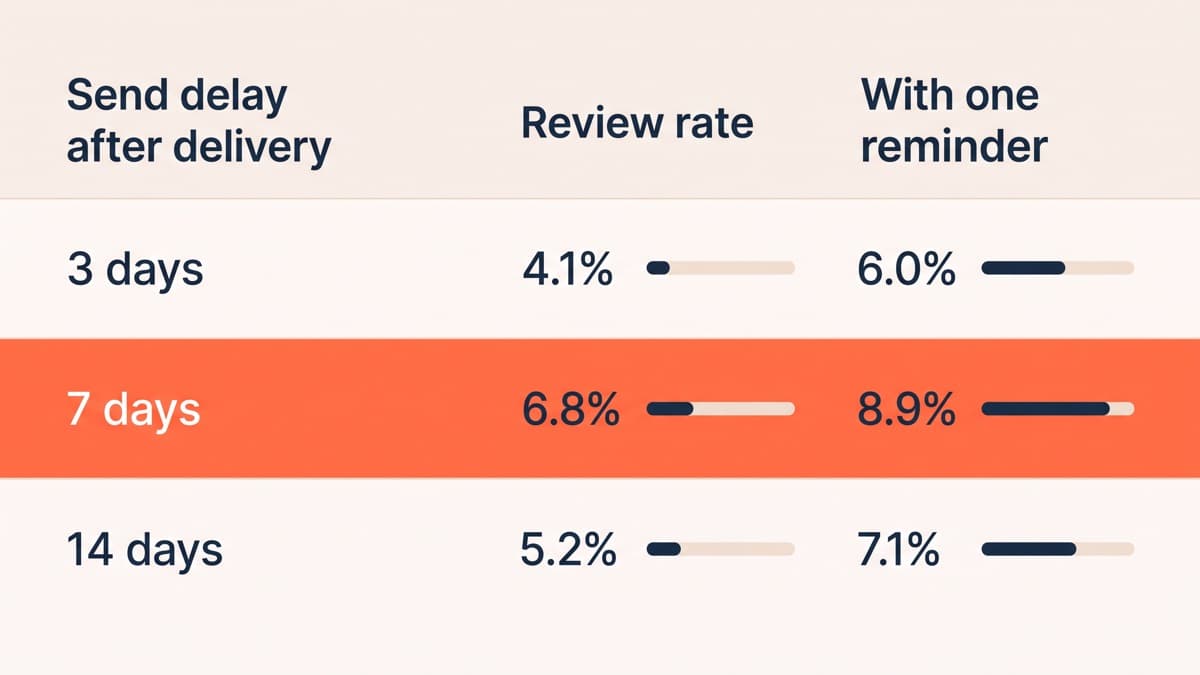
Trigger from delivery, then wait long enough for the thing to have been used once. On a fashion client, requests sent 3 days after delivery confirmation returned a 4.1% review rate; the same email at 7 days returned 6.8%; at 14 days it fell back to 5.2%. The right lag is product-dependent, and you can find yours inside a quarter by splitting the delay rather than arguing about it. A single reminder to non-responders is worth roughly two more points, and a third send is worth almost nothing except unsubscribes.
Channel matters less than timing, with one exception. Messaging wins on speed and email wins on photographs, because attaching an image from a phone keyboard is more effort than most people will spend on a text message. The in-package card that asks somebody to type a URL is the weakest option in the set and the one most often chosen, because it is the only one that feels like a physical brand gesture.
What you are actually allowed to offer
Incentives are where stores get into genuine trouble, and the rules tightened in both directions. In the UK, the unfair commercial practices provisions of the Digital Markets, Competition and Consumers Act 2024 have been in force since 6 April 2025: fake reviews are banned outright, as are reviews that conceal the fact they were incentivised, and anyone publishing reviews has to take reasonable and proportionate steps to prevent and remove both. The Competition and Markets Authority opened a fresh set of investigations into fake and misleading reviews on 27 March 2026.
In the United States, the Federal Trade Commission rule on the use of consumer reviews and testimonials, 16 CFR Part 465, has been effective since 21 October 2024. It bans fake and AI-generated reviews, bans buying positive or negative ones, and bans compensation conditioned on a review expressing a particular sentiment. Read the shape of that last prohibition carefully, because it is precisely where most loyalty-point programmes go wrong.
The practical rule that satisfies both regimes is short. You may offer something for a review. You may never offer it for a good review. And the incentive has to be disclosed on the review a shopper is reading, not in a policy page they are not. Loyalty points for any verified review, with an Incentivised label rendered on each affected review, is defensible in both jurisdictions. Ten per cent off your next order if you leave five stars is not defensible in either, and neither is quietly filtering the incentivised three-star ones out of the average.
Moderation is not curation
The urge to delete the bad ones is the most expensive instinct in this article, and the legal exposure is only half of why. A perfect average is read as a filtered average. In our archive, products displaying an average of 4.9 or 5.0 converted below comparable products showing 4.5 to 4.8, and the gap widened on higher-priced items where shoppers read the reviews rather than glancing at the stars.
The negative reviews are doing work: they are what makes the positive ones legible. So moderate on legitimacy rather than on sentiment. Remove reviews that are not about the product, that contain abuse or somebody’s personal data, or that arrive as an obviously coordinated batch, and keep everything that is a genuine opinion, including the one-star review that is really about a courier. Write that policy down and apply it by rule, because a moderation standard living in one person’s judgement is the one that quietly becomes a sentiment filter.
Display: what the review block owes a shopper
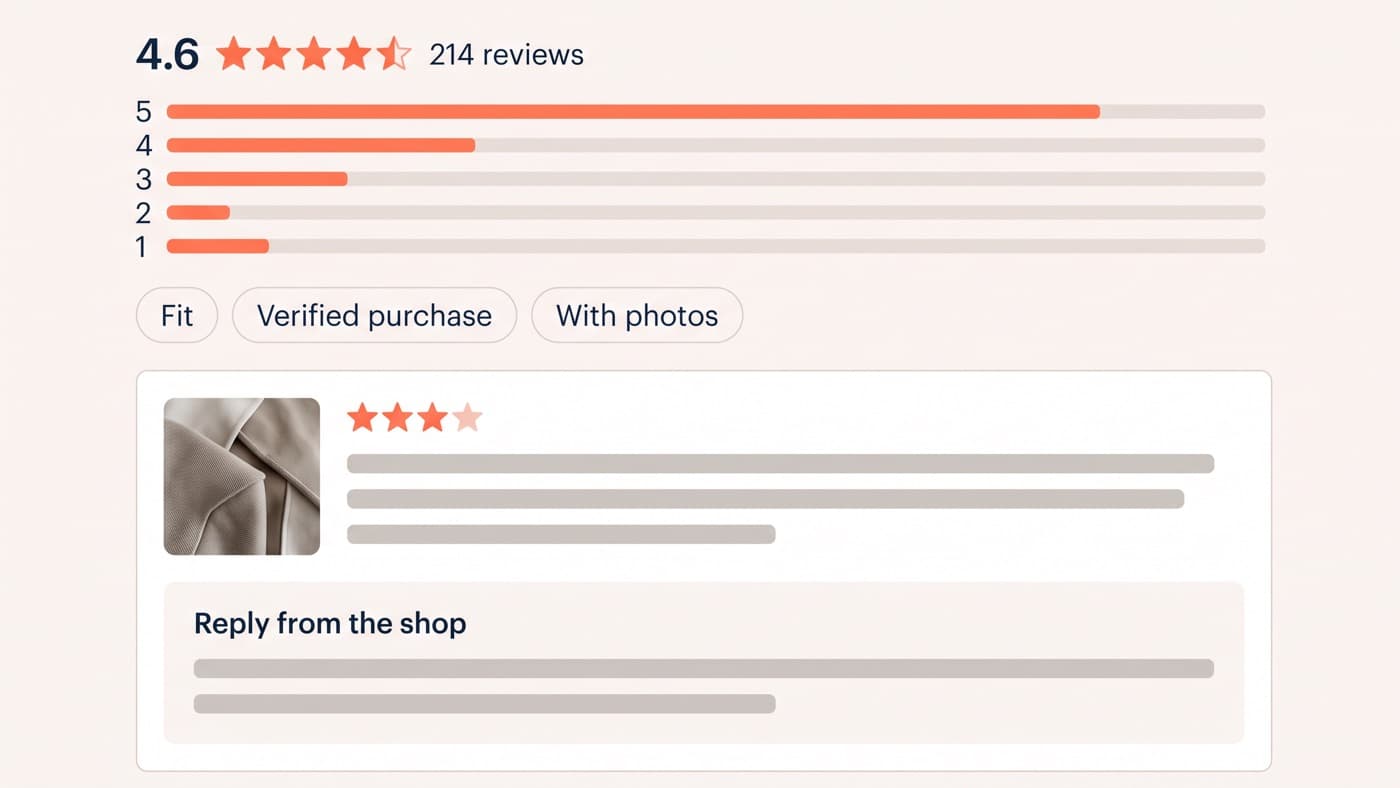
Somebody reading reviews is doing research, not counting stars, and the block should be built for research. The rating and the count belong together near the product title, and everything below it exists to answer the specific doubt that sent the shopper down the page.
- A distribution histogram, because a 4.6 built from mostly fives reads very differently from a 4.6 built from threes and fives.
- Filters that match the doubts of the category: fit, size ordered, skin type, room, verified purchase.
- Reviewer context that makes one review comparable to another, such as usual size against size bought, without collecting anything you would be uncomfortable displaying.
- Customer photographs, sorted so the reviews carrying images are reachable in a single tap.
- A most-recent sort option, because a two-year-old review of a reformulated product is worse than no review at all.
- Merchant replies rendered inline beneath the review they answer, rather than in a support thread nobody can see.
Customer photographs are the premium exhibit in that list, because they are the only element a store cannot art-direct. Ask for the image at the moment of highest willingness, which is inside the review form itself while somebody is already typing, rather than in a later campaign that asks them to go and find the product again.
Negative-review judo
A one-star review with a good reply underneath it is worth more than no review, because the reply is the only evidence on the page of how the store behaves when something goes wrong. Reply publicly, quickly and specifically, and never with the phrase about being sorry somebody feels that way, which reads as a refusal dressed as an apology.
The reply is written for the next shopper rather than for the reviewer, and it has one job: name the cause, say what changed, and stop. When the same complaint appears four times, the review block has stopped being a trust element and started being merchandising research, and the answer is a corrected description, a revised size chart or different packaging. No volume of well-written replies fixes a product page that is wrong.
Apps, markup and stars in search
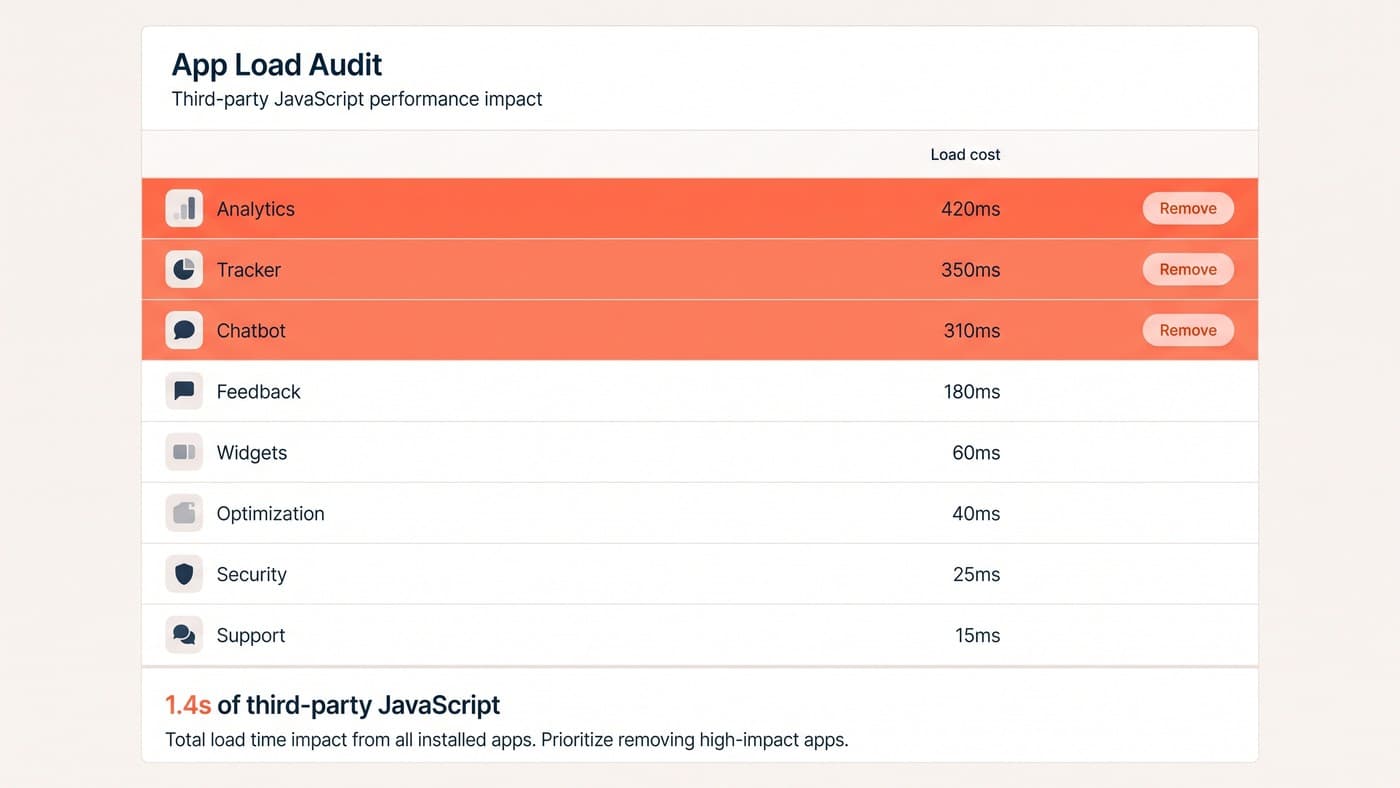
Review apps are a commodity and should be chosen on three things: whether the review content renders in the page markup rather than only inside a widget, what it costs the page in weight, and whether you can export everything if you leave. Every one of them adds script to the most commercially important template you own, so it belongs in the same conversation as the rest of your app stack, judged on rendered weight rather than on feature lists.
The markup rules have moved too, so check yours against the current documentation rather than against what the app promised in 2023. Reviews of a product on your own product page remain eligible for star snippets when marked up and visible on the page; self-reviews of your own business under the LocalBusiness or Organization types are not eligible. On 24 July 2026 Google added an explicit instruction not to include fake or undisclosed incentivised reviews on the page or in the structured data, which quietly makes an incentive disclosure a search requirement as well as a legal one.
None of the four steps is a content exercise. The ask is lifecycle logic, the moderation is policy, and the display is interface design with a research job attached, which is why the useful question to put to any vendor is how they would test the review block rather than which app they prefer. If yours is a widget nobody has opened since it was installed, start by reading what it actually renders.