The fake countdown timer is not just tacky any more. In a growing list of jurisdictions it is evidence. And in our own archive of 1640+ tests, the manipulative patterns have a consistent habit: they win the click and lose the customer, and they do it slowly enough that the person who shipped them has been promoted before anybody notices.
This article owns two things: the taxonomy, so you can name what is on your own site, and the regulatory position, stated by jurisdiction and by date rather than as a general warning. What earns trust instead belongs to the work on trust signals, and the measurement that catches a borrowed win belongs to guardrail metrics. Both get linked rather than restated.
The taxonomy: six families that keep recurring
The academic literature counts dozens of variants. In ecommerce the same six do almost all the damage, and every one of them has a legitimate sibling it is usually mistaken for.
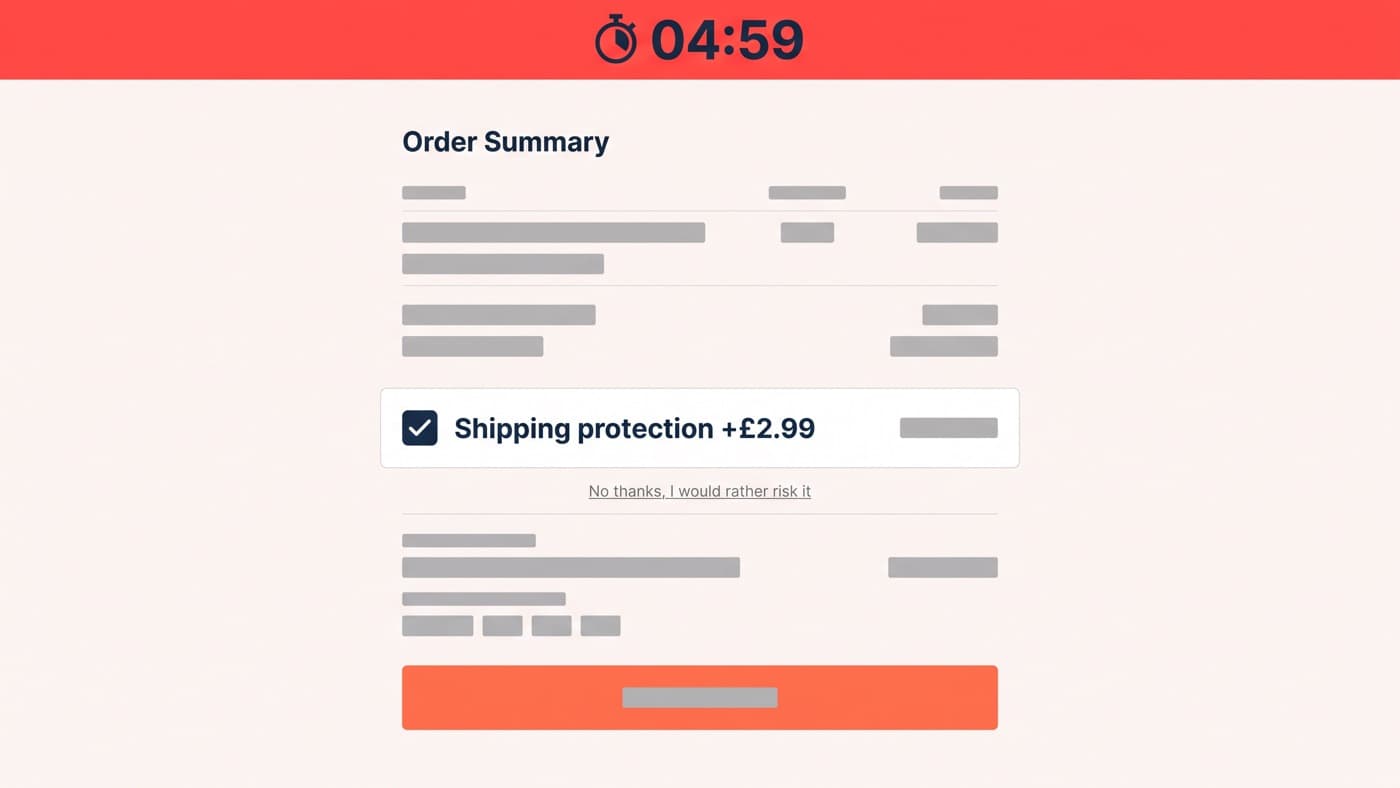
- Fake urgency and scarcity. A timer reading 04:59 that resets to 04:59 on reload, or a stock counter with no relationship to inventory. The legitimate sibling is a real deadline or a real stock level, stated plainly.
- Drip pricing. A headline price that grows as the shopper proceeds, with mandatory booking, service or delivery fees revealed only at the payment step.
- Sneaked add-ons. A pre-ticked shipping protection, warranty or donation line the shopper has to notice and remove rather than choose and add.
- Confirm-shaming. A decline option worded to make refusal embarrassing, the No thanks, I would rather pay full price school of interface copy.
- The roach motel. Sign-up in two taps and cancellation by telephone during office hours, or a cancellation flow that routes through four retention offers.
- Disguised advertising and misdirection. Sponsored results styled identically to organic ones, or a visual hierarchy that makes the expensive option look like the default choice rather than a choice.
The regulatory turn in the European Union
The Digital Services Act became directly applicable across the EU on 17 February 2024, and its Article 25 is the first EU provision to address these designs by name. It prohibits providers of online platforms from designing or operating interfaces in ways that deceive or manipulate users, or that otherwise materially distort their ability to make free and informed decisions.
Read the scope carefully before either panicking or relaxing. Article 25 binds online platforms, meaning services that host and disseminate information from third parties, so a marketplace is squarely in scope while a single-brand store selling its own stock generally is not. That does not leave the store free: the Unfair Commercial Practices Directive has covered misleading and aggressive practices across the EU for years, and a timer that lies is a misleading practice under it whether or not the DSA applies.
The Digital Fairness Act is the piece everyone is citing early. It is not law and there is no text: the European Commission ran a public consultation from 17 July to 24 October 2025, and a proposal is scheduled in its work programme for the fourth quarter of 2026, after which the ordinary legislative procedure takes years. Dark patterns, addictive design and personalisation are all named as targets. Treat it as direction of travel, not as a compliance deadline, and be suspicious of anyone selling against it today.
The United Kingdom and the United States
The UK moved first on the commercial detail. The unfair commercial practices provisions of the Digital Markets, Competition and Consumers Act 2024 came into force on 6 April 2025, and they let the Competition and Markets Authority decide that a breach has occurred and fine up to 10% of global turnover without going to court first. Mandatory charges must appear in the headline price, and fake or incentivised reviews are explicitly banned.
That is not theoretical. In April 2026 the CMA issued its first consumer fine under the Act, requiring AA Driving School and BSM to pay 4.2 million pounds and refund over 760,000 pounds to more than 80,000 learner drivers, over a mandatory 3 pound booking fee that new customers saw only at checkout after choosing lesson times and entering their details. The separate DMCC subscription-contracts regime, which is the one that will govern cancellation flows, is not yet in force and has slipped to autumn 2026 at the earliest.
The United States is the jurisdiction most often described inaccurately. There is no dark-pattern rule in force. The FTC’s 2024 negative-option rule, the click-to-cancel rule, was vacated in its entirety by the Eighth Circuit on 8 July 2025 on procedural grounds, and the Commission restarted rulemaking with an advance notice sent for review on 30 January 2026 and comments due that April. What remains fully live is the Restore Online Shoppers’ Confidence Act and Section 5 of the FTC Act: the Amazon Prime order entered on 25 September 2025 carried a 1 billion dollar civil penalty and up to 1.5 billion dollars in consumer redress over enrolment and cancellation design, which is 2.5 billion dollars for interface decisions.
Winning the click, losing the customer
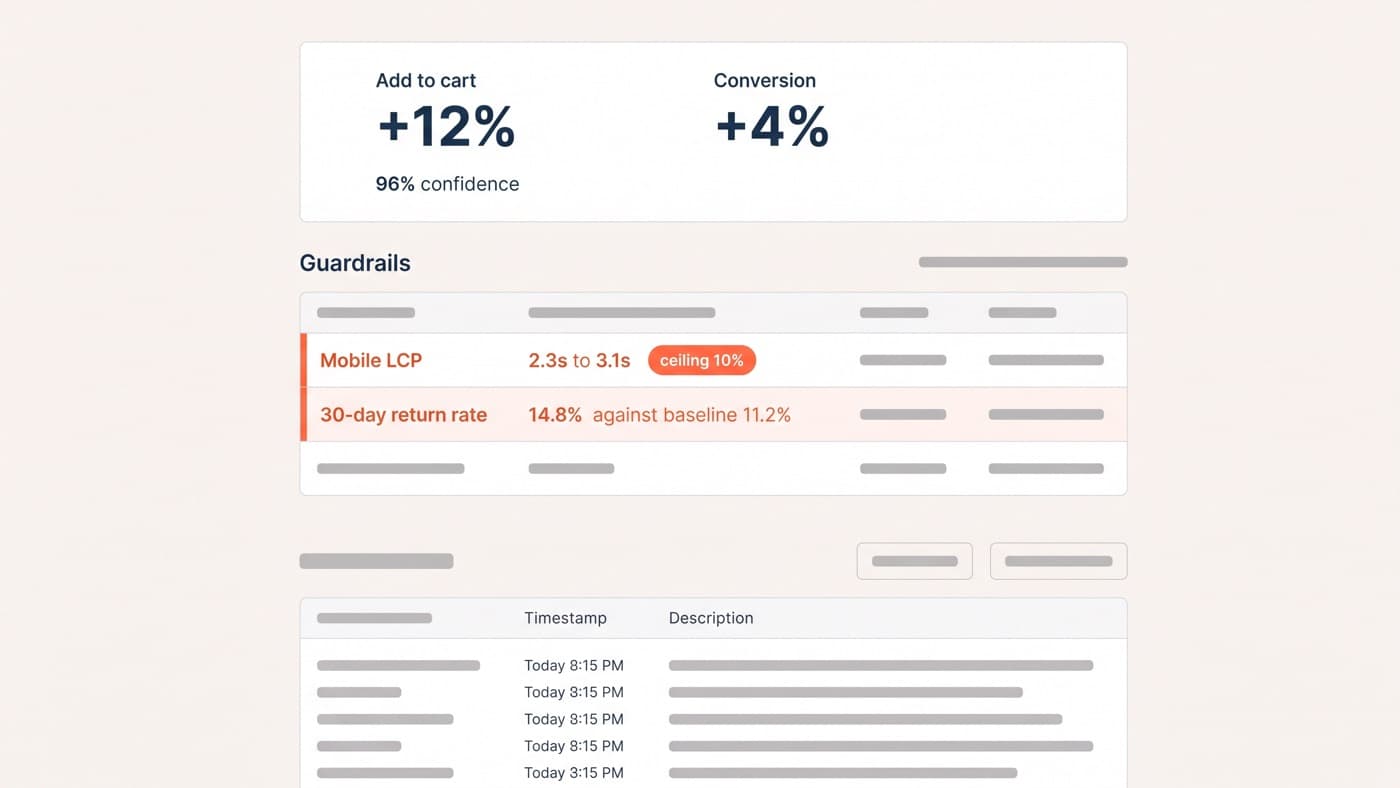
The commercial case does not depend on any of that. Manipulative patterns tend to test well on the metric they were built to move and badly on everything else, which is exactly the profile a conversion-rate-only test programme is blind to.
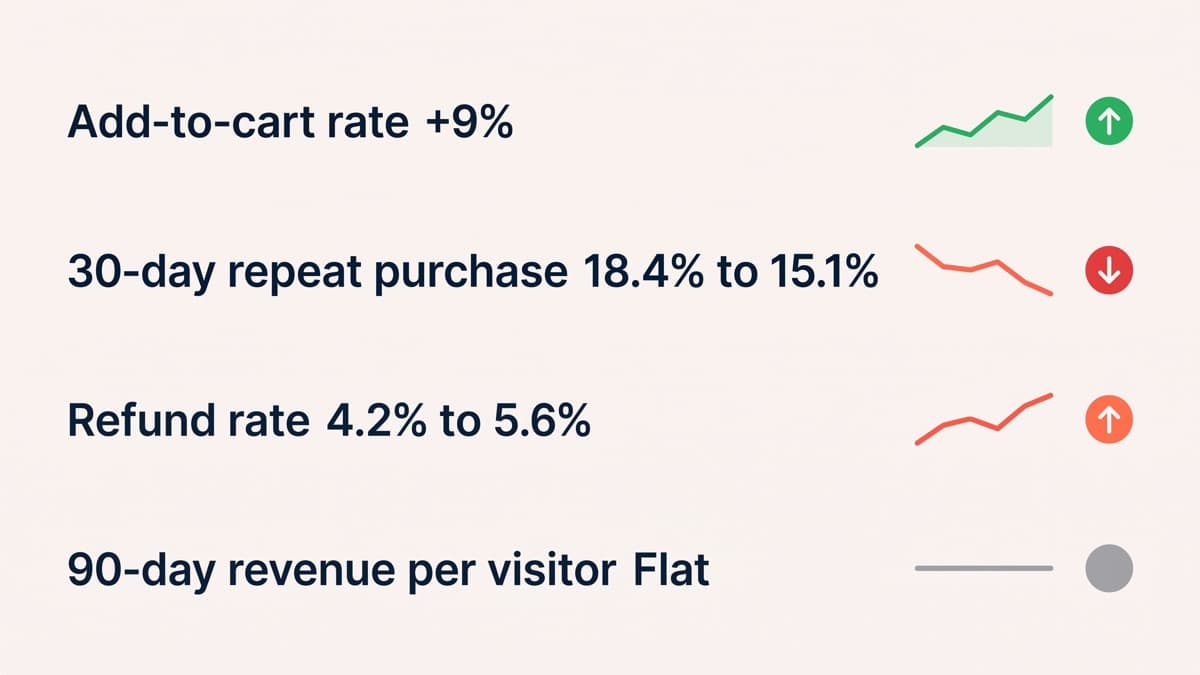
A fashion client ran a product-page countdown timer with no real deadline behind it. Add-to-cart rate rose 9% at 96% confidence, and the test would have shipped in most programmes. The guardrails told a different story over the following quarter: 30-day repeat purchase rate fell from 18.4% to 15.1%, refund rate rose from 4.2% to 5.6%, and revenue per visitor across 90 days came out flat against the control. The store had borrowed from its own future at a poor rate.
The pre-ticked add-on behaves the same way. A shipping-protection line ticked by default reached a 31% attach rate against 11% when shoppers had to choose it, and the refund rate on those orders ran at 11% against 4.2% for everything else, with support contacts about unexpected charges roughly tripling. The revenue was real and so was the cost, and only one of them appeared on the test dashboard.
What to do instead
The alternatives are not softer versions of the same trick. Real deadlines stated plainly outperform invented ones over any horizon longer than a quarter, because a shopper who has been caught by a resetting timer once discounts every future claim you make. Genuine low-stock notices work for the same reason and stop working the moment they are decorative. Ethical urgency is a real category and the useful rule is that the message must be false to remove: if you cannot delete the claim without lying, you can keep it.
Then make the measurement catch the rest. Every test that touches urgency, pricing presentation, defaults or cancellation should carry guardrails: refunds, repeat purchase at 30 and 90 days, support contacts per hundred orders, and revenue per visitor rather than conversion rate alone. That is ordinary discipline in interface design rather than an ethics programme, and it is the cheapest protection available against shipping something that a regulator, or your own repeat-purchase curve, will object to later. If somebody in your organisation is currently defending a timer, the guardrail conversation is the one to have.