Roughly seven out of every ten carts on your store will be abandoned this week, and the industry’s standard answer is a discount popup and an email sequence. Both help at the margins. The bigger wins sit earlier in the journey and are far less glamorous, and a meaningful share of abandonment is not a problem at all: it is window shopping you cannot convert and should not pay to chase.
Cart abandonment is the share of created carts that never become orders, and the widely cited industry average has sat around 70% for years. The number is real but blunt: it mixes shoppers who hit a blocker you can remove with researchers using the cart as a shortlist. Reducing it starts with separating the two.
The real abandonment maths
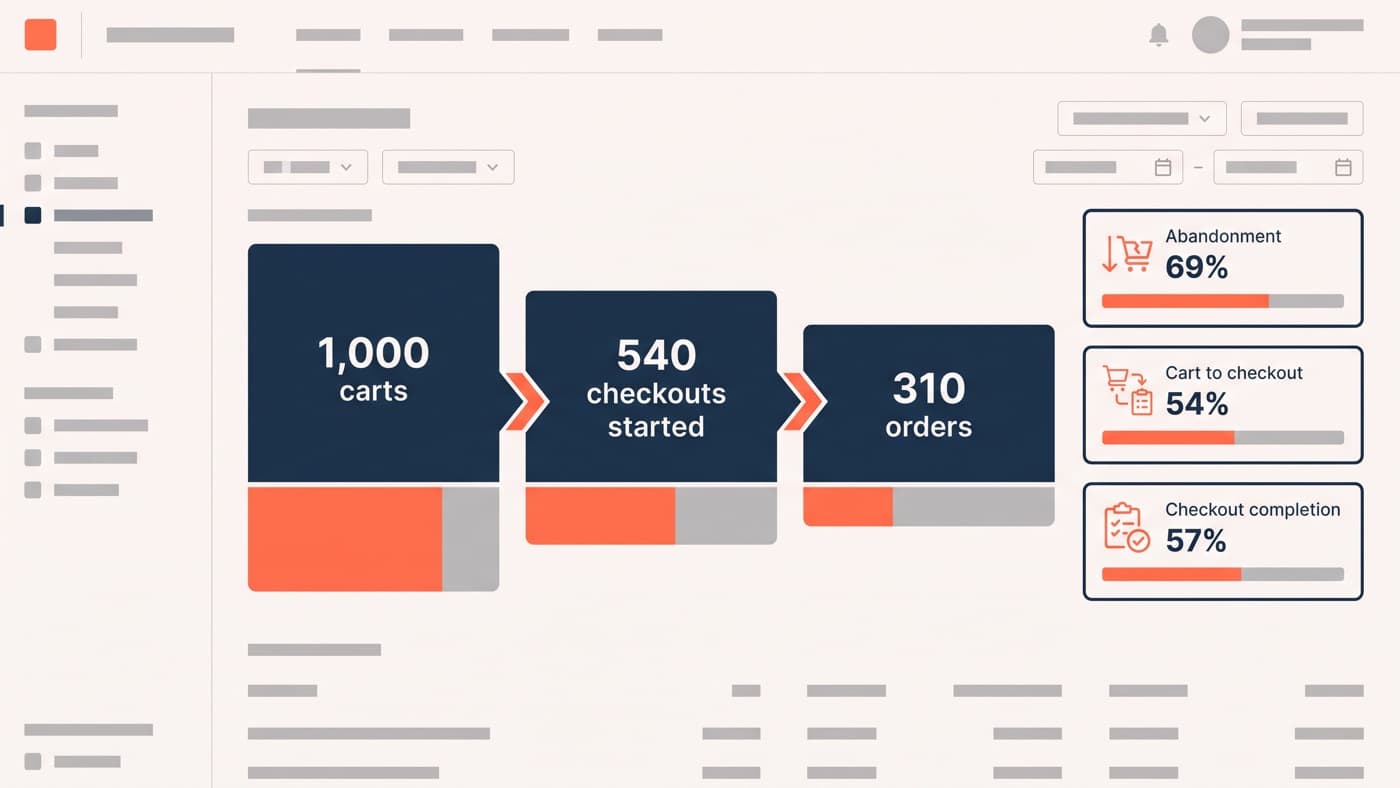
Put your own numbers on it before buying any tool. A store creating 1,000 carts a month might see 540 reach checkout and 310 convert to orders: 69% abandonment overall, but two very different leaks. Cart-to-checkout at 54% is mostly intent and surprise-cost territory; checkout completion at 57% is friction territory. The fixes for each are different, which is why the single blended percentage is nearly useless as a to-do list.
Benchmarks matter less than your own split. The same 69% blended rate could hide a healthy cart step and a broken checkout, or the reverse, and the two stores would need opposite plans.
Some of the 690 lost carts were never yours to win. Shoppers park items to compare, to wait for payday, to check shipping costs, and treating all of them as failures leads to overcorrection: aggressive popups, fake urgency and discount training. The recoverable share is the group that wanted to buy and hit something: a surprise cost, a forced account, a slow page, a missing payment method. Chasing the first group with discounts does not convert them; it reprices the orders you were already getting.
Why carts are actually abandoned
Industry checkout research has ranked the causes consistently for a decade, and the order rarely changes: unexpected costs at the end, being forced to create an account, checkouts that are long or confusing, not trusting the site with card details, and missing payment options. Slow pages amplify all of them. What should strike you about that list is that none of it is about persuasion; it is all about friction and honesty.
Two of those causes deserve a note. Missing payment options is quietly rising as wallets spread: a shopper who expected to pay with a wallet and finds card fields faces a form they may never finish. And trust is rarely about your brand; it is about whether the checkout looks and behaves like checkouts they have safely used before.
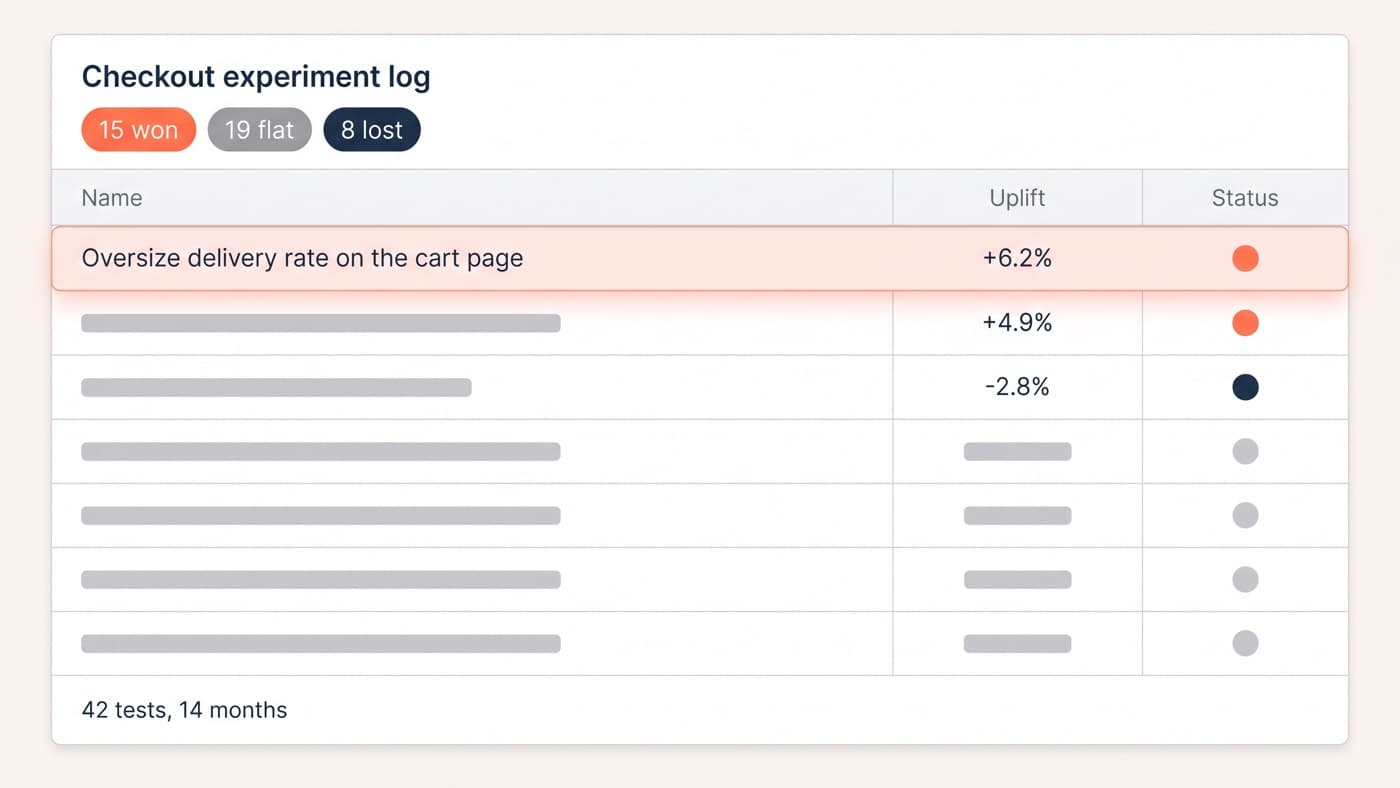
That matches what we see when we test. The fixes below are ranked by how they have performed in our archive of 1640+ ecommerce tests, not by how easy they are to sell, and the pattern across them is consistent: giving shoppers accurate information earlier beats pressuring them harder later.
Fixes ranked by tested impact
- Show total costs early. Delivery cost revealed in the cart, or on the product page, rather than at checkout is the most reliable single fix we test.
- Default to guest checkout. Account creation belongs after the order confirmation, when the shopper has a reason to save their details.
- Add express payment. Wallet buttons collapse the form for the shoppers who have them, and wallets routinely carry a third or more of mobile orders.
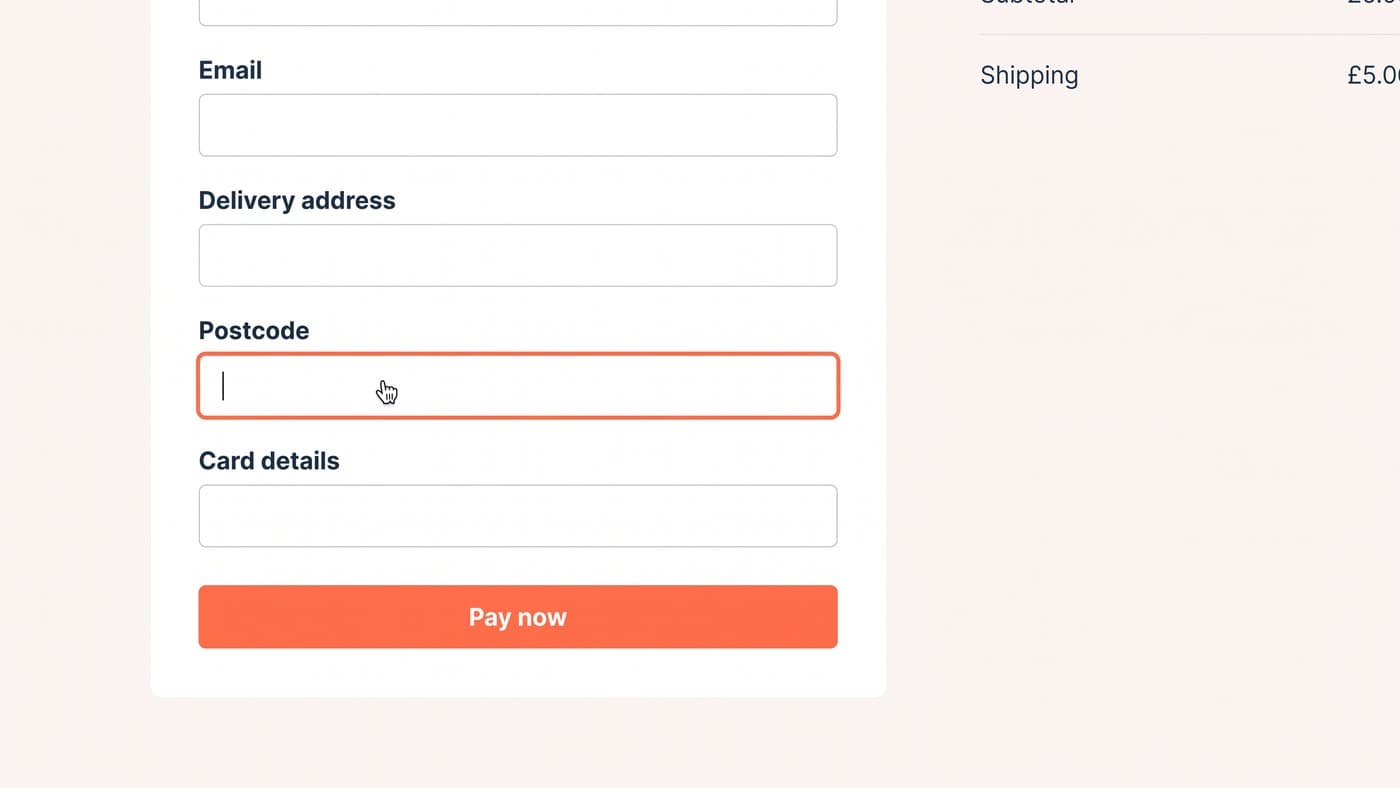
- Cut form fields. Every field is a small toll; company name, second address line and phone number should justify themselves or go.
- Answer trust questions at the payment step. Returns terms and delivery dates restated beside the pay button, not linked three taps away.
- State delivery dates, not delivery speeds. Arrives Thursday outperforms ships in 24 hours, because it answers the question shoppers actually have.
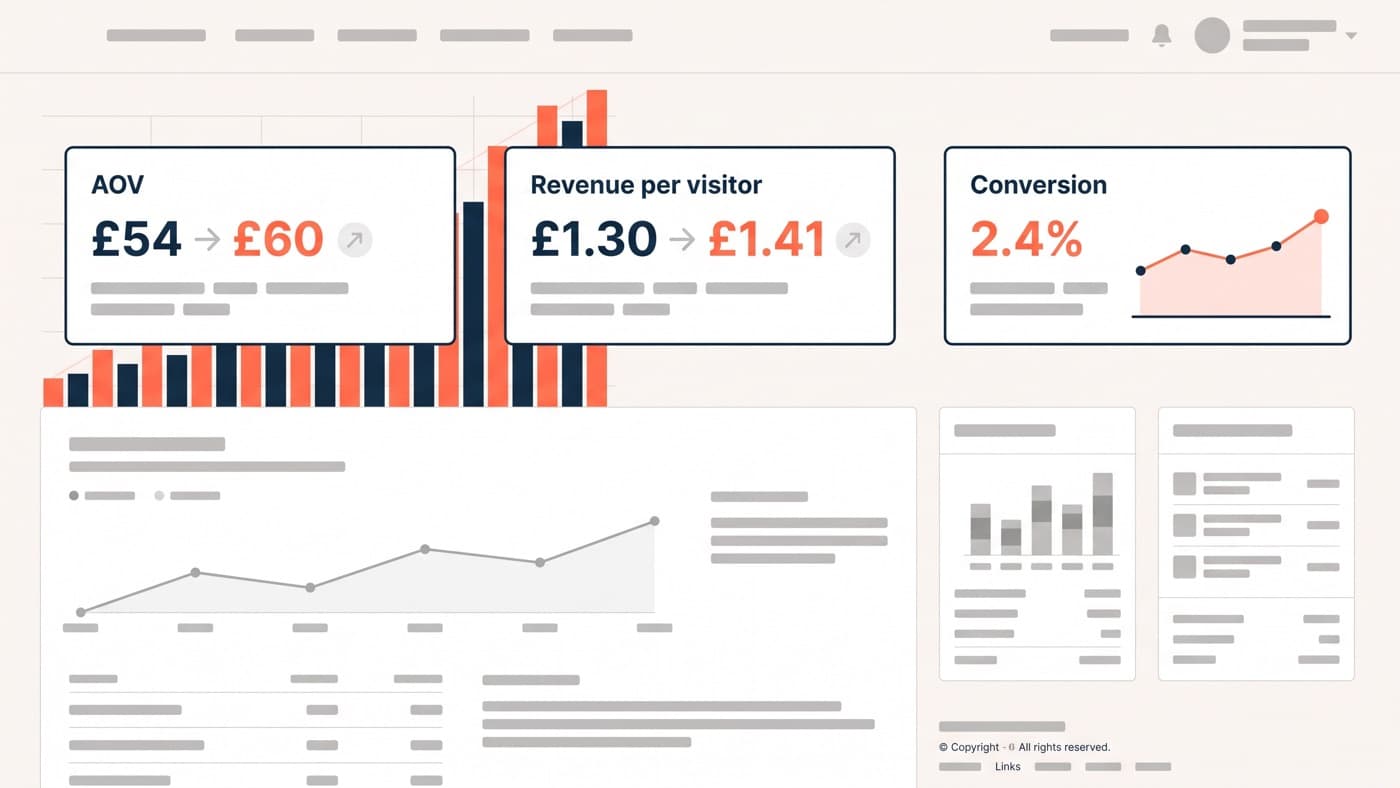
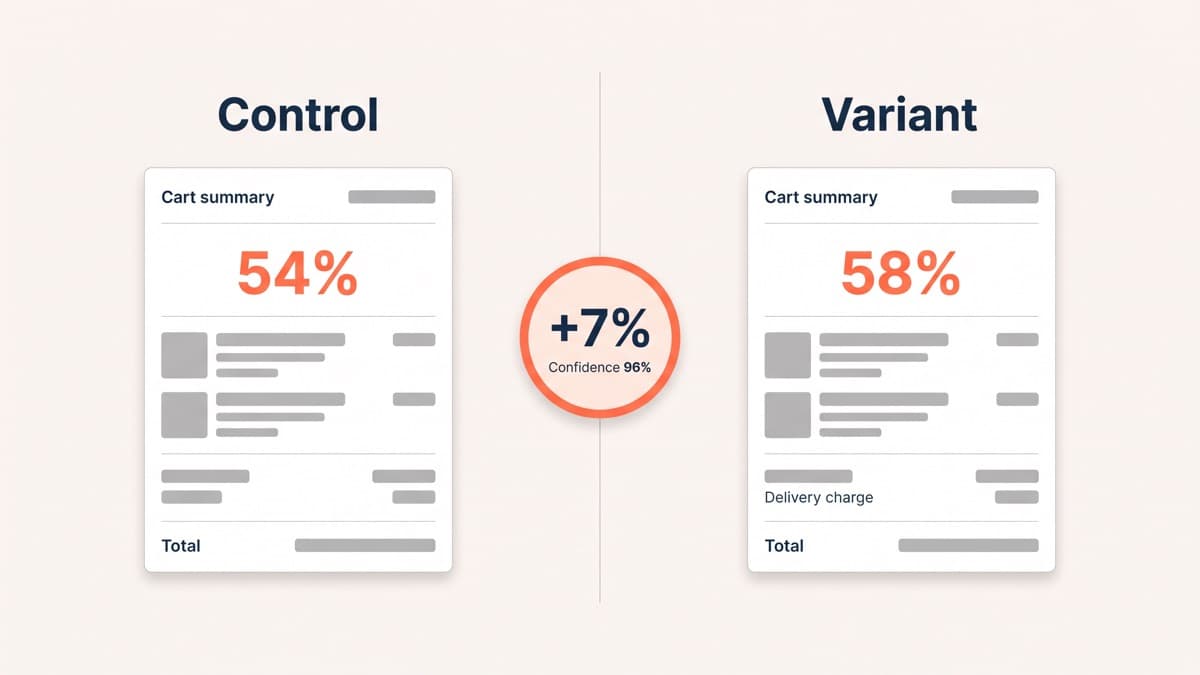
The first item earns its ranking. One homeware store we tested moved its delivery charge from the checkout’s final step into the cart summary, and cart-to-checkout progression rose from 54% to 58%, a 7% relative lift at 96% confidence. Shoppers did not mind the charge; they minded discovering it late. Checkout friction beyond costs has its own playbook, which our checkout UX guide covers field by field.
The recovery layer, honestly
Abandoned-cart emails work, with honest expectations attached. A prompt first email within an hour or two, an accurate product photo and a working link back to a persistent cart will typically recover a mid-single-digit percentage of abandoned carts. That is real money at scale and a rounding error if your checkout is the actual problem. Recovery is a net under the funnel, not a repair to it. Add SMS only after email works: it is more intrusive, more expensive per send, and it amplifies whatever your first email already is, good or bad.
Discounting in recovery emails deserves particular caution. A code in the first email trains repeat customers to abandon deliberately, and the cost lands invisibly in your margin. Hold discounts back to a later email, if you use them at all, and watch whether redemptions come from genuinely hesitant shoppers or from your regulars.
What not to do
The tactics to avoid are the ones that treat every abandoner as a failure of pressure. Exit-intent popups that snap open on every cart page cheapen the brand for all visitors to recover a sliver. Countdown timers that reset on refresh are fake urgency, and shoppers notice. Hiding costs until the last step to protect add-to-cart rates simply moves the abandonment later, where it is more expensive. In our archive, pressure tactics lose or go flat far more often than information tactics win. The test for any tactic is simple: does it remove a reason to leave, or add a reason to hurry? Only the first kind compounds.
Measure it before and after
Instrument the funnel as steps, cart created, checkout started, order placed, and read each transition separately, split by device, because mobile is usually where the worst numbers hide. The blended abandonment number is for benchmarking articles; the step transitions are the ones a fix can actually move. Then treat fixes as experiments rather than faith: the changes above are all testable, and we ran 42 tests on one checkout precisely because intuition kept being wrong about which would matter.
If your abandonment problem survives the list above, the remaining work is diagnosis and controlled testing rather than another app, which is what A/B test development is for. And if you want a second pair of eyes on your own funnel numbers first, get in touch.