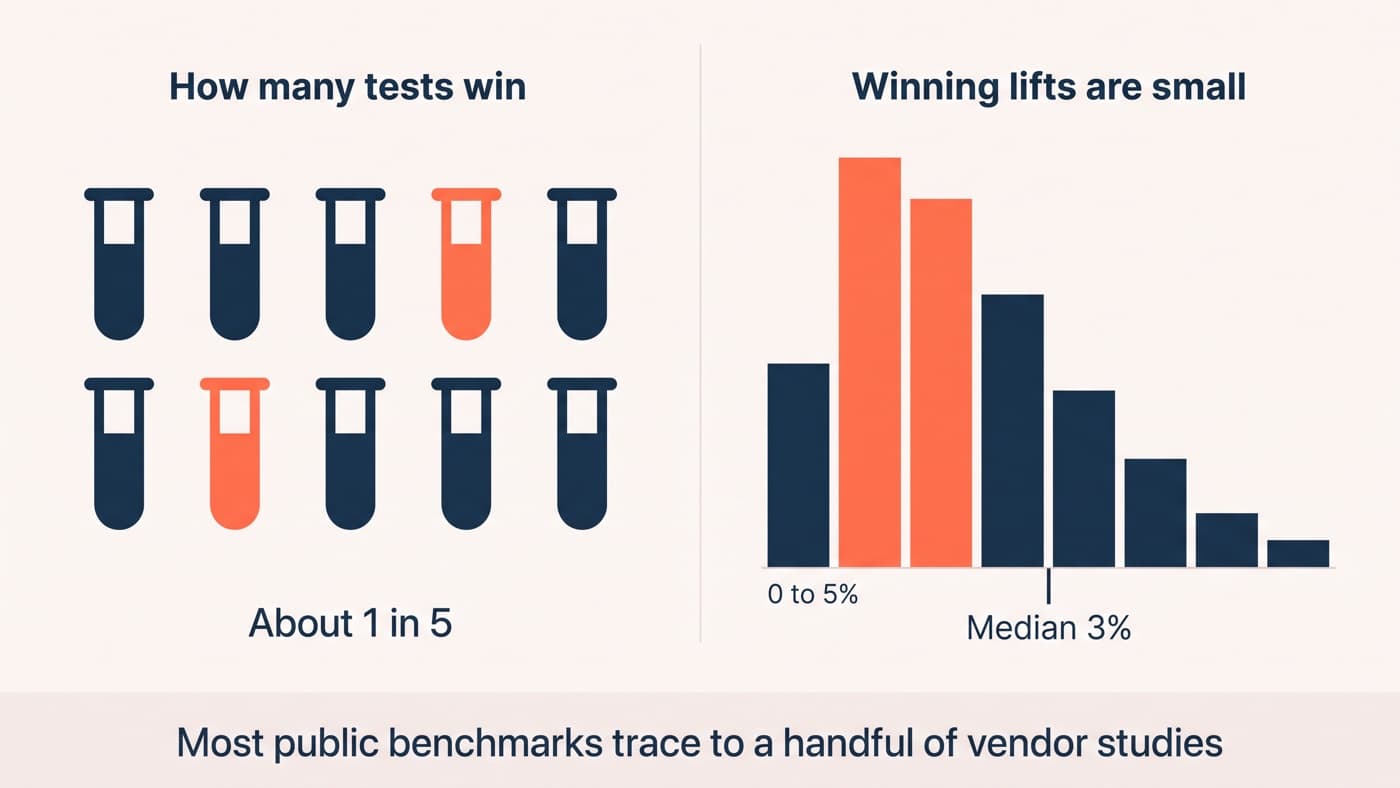
Price is the highest-leverage variable on your store and the one almost nobody tests: half out of fear, half because Shopify makes it genuinely awkward. Both halves are solvable. A 3% conversion lift from a layout test is a good quarter; a price that turns out to support 8% more margin changes the economics of every order you ship from now on.
The leverage cuts both ways, which is the honest reason for the fear. Get a layout test wrong and you shipped a worse button for three weeks. Get pricing wrong and you trained a cohort of customers on a number you now need to walk back. This is a test category where the build discipline is not hygiene; it is the whole game.
This guide covers the mechanics, the guardrails, the law and the patterns, in that order, because that is the order the risk lives in. Get the first two right and the rest of it is just another experiment, read on a better metric than most, with more riding on the answer than any button test will ever carry.
Why price tests punch above layout tests
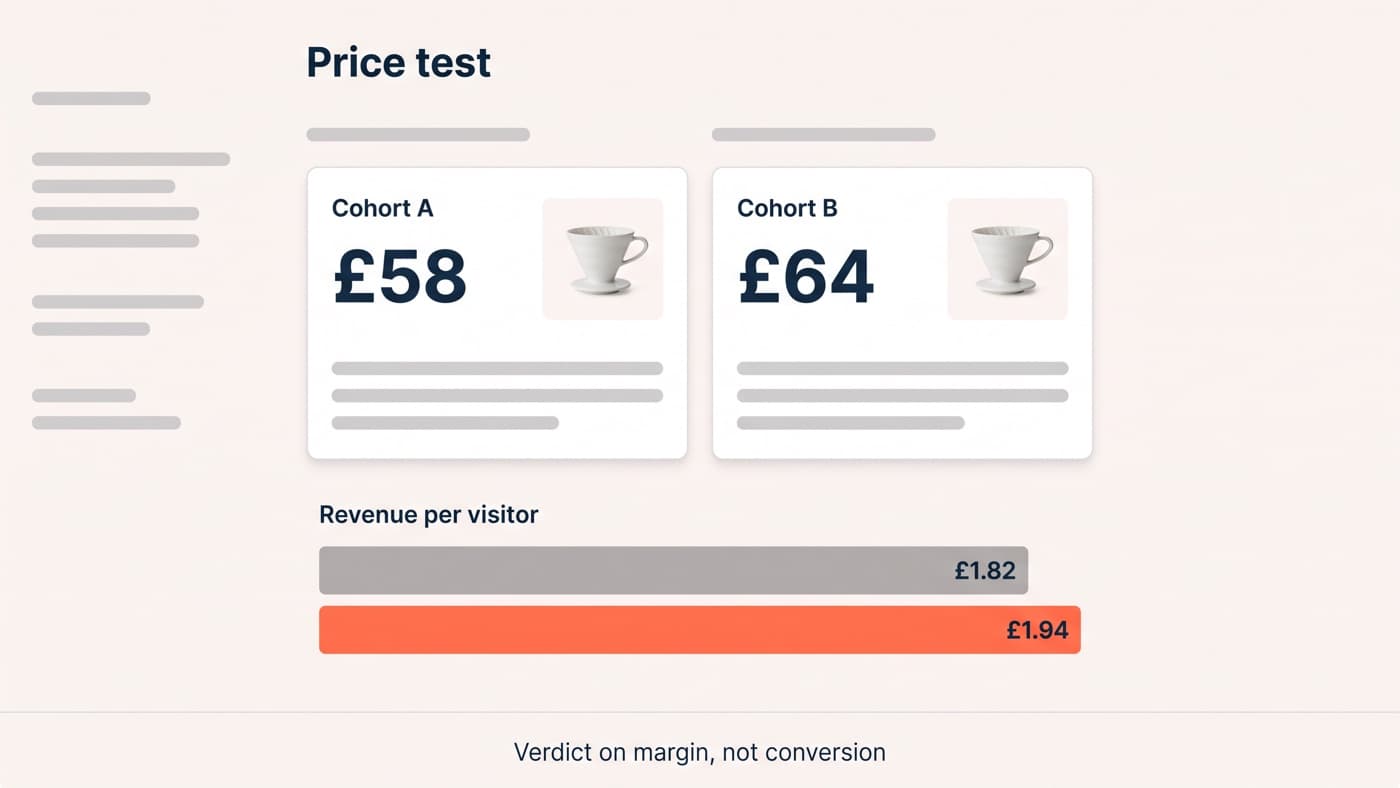
Work one example. A product sells at £58 with a £22 landed margin. Test £64, and suppose conversion on that cohort drops 6%: you still make roughly 18% more margin per visitor, because the extra £6 is nearly pure margin on every sale that survives. Layout tests move the numerator; price tests move numerator and unit economics at once. That asymmetry is why the verdict metric must be revenue or profit per visitor, never conversion rate, which a price rise will almost always nudge down while making you richer.
How it actually works on Shopify
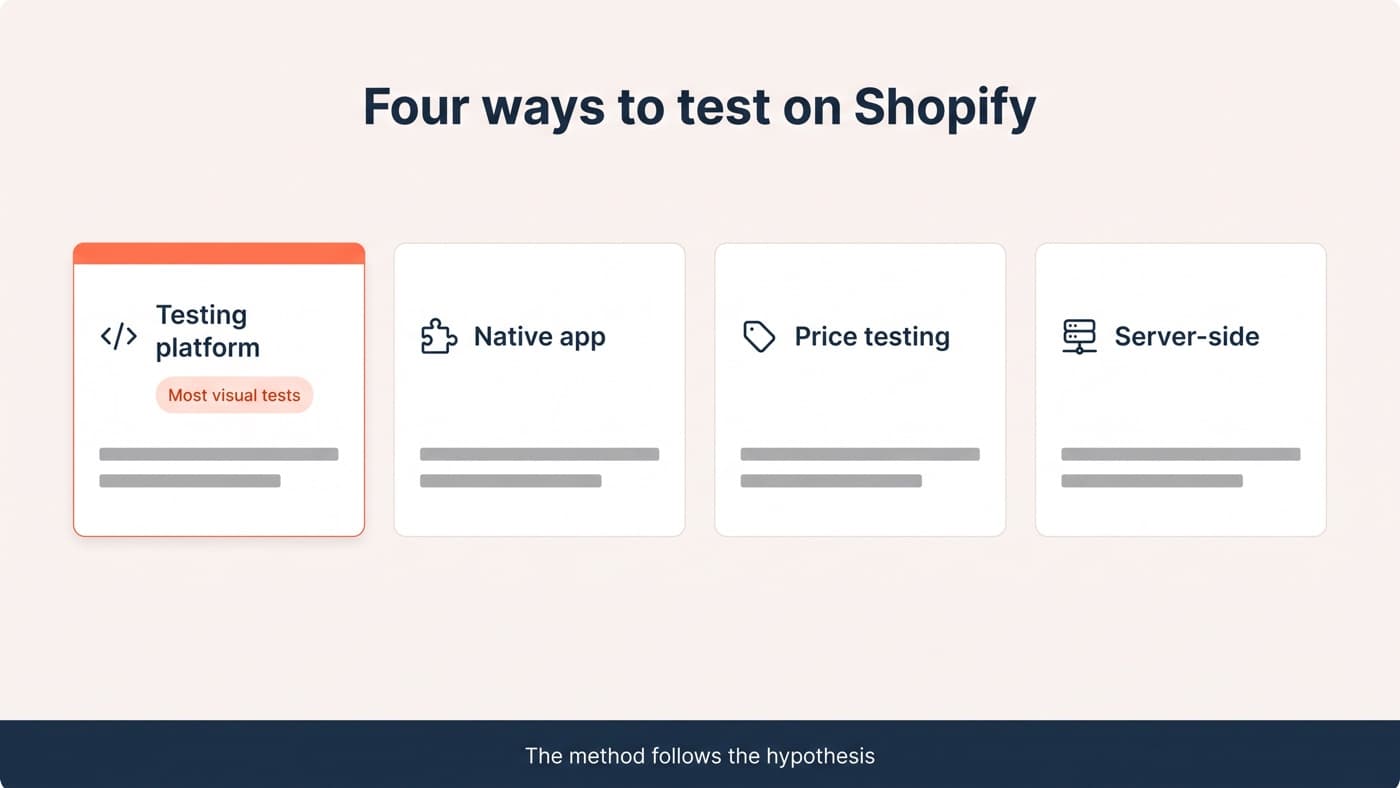
The general-purpose testing platforms are the wrong tool here, and the popular workaround, swapping the displayed price with JavaScript, is actively dangerous: the visitor sees one number on the page and another in checkout, which is the fastest trust destruction available in ecommerce. Cohort tools built for the job, Intelligems being the established one, do it properly: each visitor is assigned to a price cohort, sees that price consistently across product page, cart, checkout and follow-up email, and stays in that cohort on return visits. The method question sits inside the broader map of ways to test on Shopify, where price is its own lane precisely because the generic lanes handle it badly.
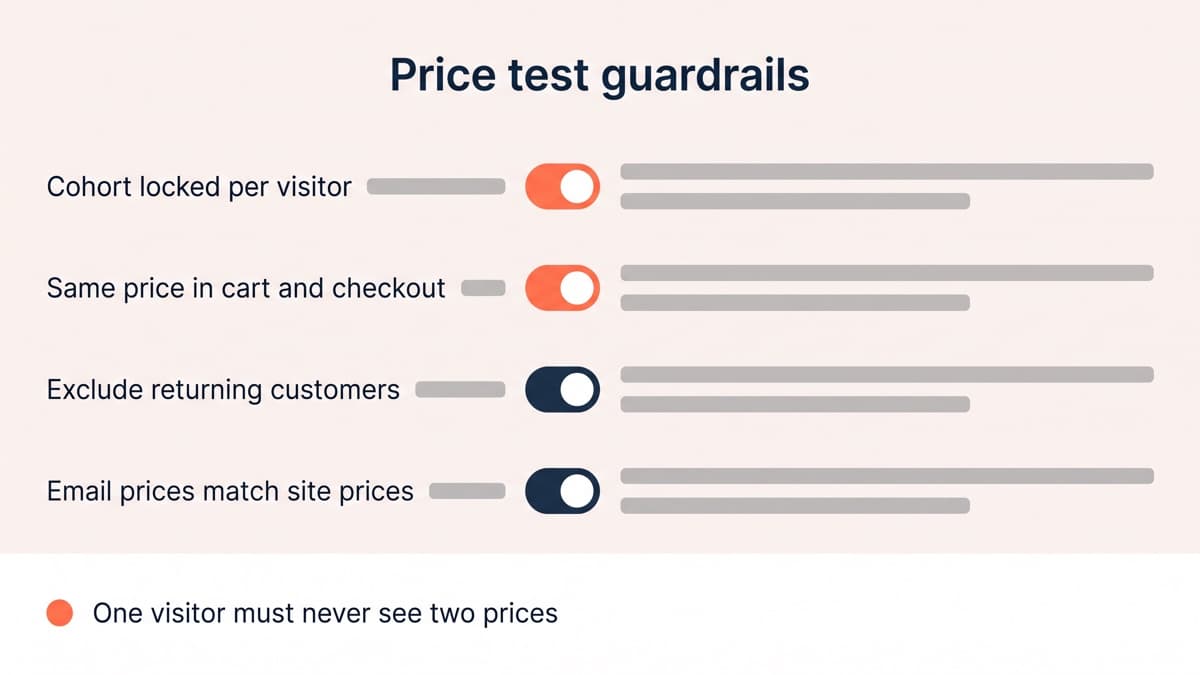
- Lock the cohort per visitor, across sessions and devices where the tooling allows. One person, one price, always.
- Carry the price everywhere: product page, cart, checkout, transactional email. Any seam between two numbers is where trust dies.
- Consider excluding recent repeat customers, who actually remember what they paid last month and are the population most likely to notice.
- Judge on profit per visitor with margins in the model, not on conversion. The whole point is that those verdicts differ.
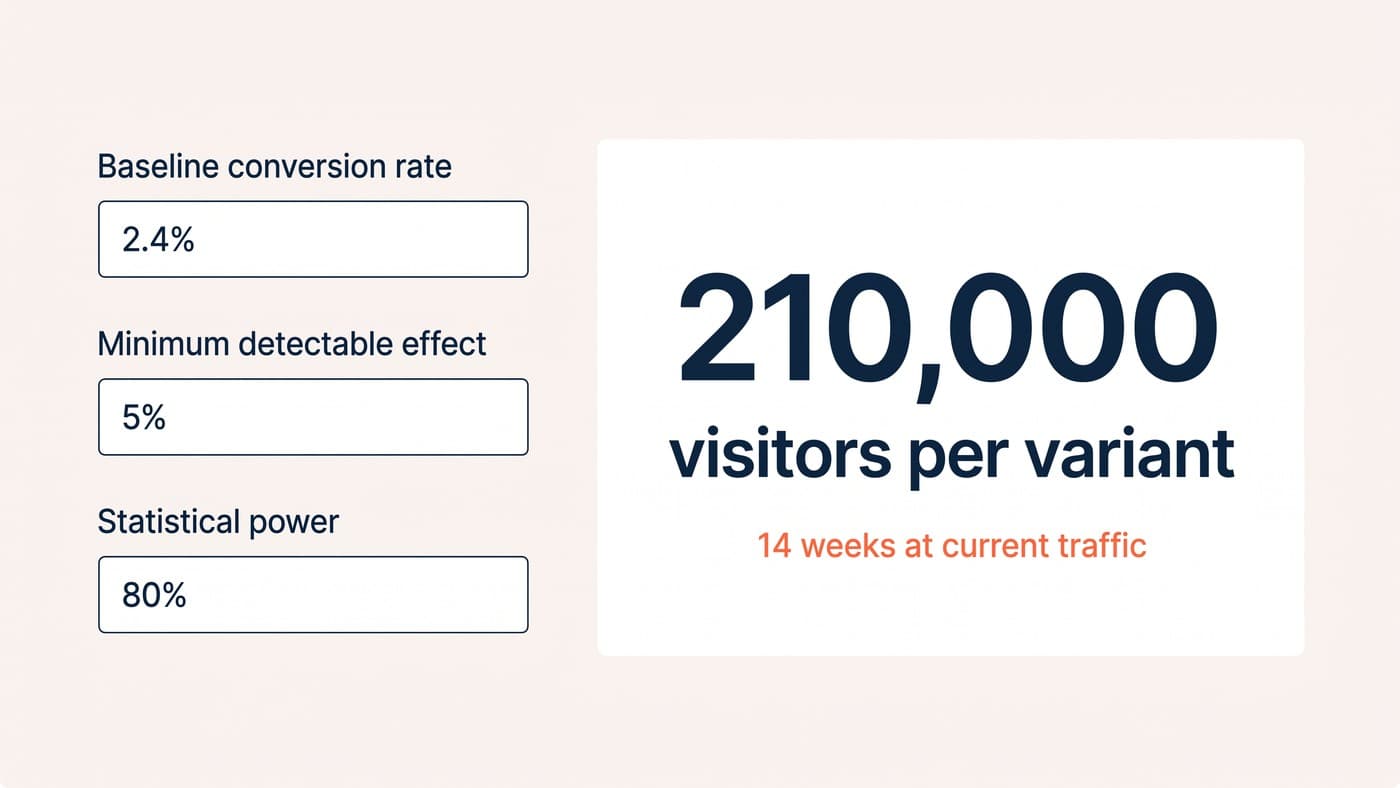
- Precalculate the sample on the money metric, and expect a longer run than a conversion test; revenue per visitor is a noisy variable.
Design the test around the readout you will need. Because the verdict metric is money per visitor rather than a conversion yes-or-no, variance is higher and the sample arithmetic is harsher: a price test on the same page needs meaningfully more traffic than a layout test to reach the same confidence. Scope it to your highest-volume products first, not because they matter most, but because they are the only places the answer will arrive before the quarter ends. And decide in advance what happens to each cohort when the test ends, because the losing price disappears but the customers who bought at it do not.
The fairness question, answered straight
Is showing different people different prices legal? For ordinary goods in the UK, EU and US, price experimentation is broadly lawful, and industries from airlines to grocers have run dynamic pricing for decades. The genuine constraints: never let price vary by protected characteristics or anything that proxies them, honour whatever price was displayed if a customer reaches checkout with it, and mind the rules on presenting discounts, which in the UK and EU require honesty about the previous price a saving is claimed against. None of this is legal advice, and if you trade across many jurisdictions the hour of a lawyer’s time costs less than one mistake.
Is it fair? Our view: a time-boxed experiment to discover the right price, run on small cohorts with consistency guarantees, is what every price change already is, minus the guesswork. Brands squeamish about cohort pricing can test across time instead, alternating price periods and reading the seasonally adjusted difference, or test structure rather than list price: thresholds, bundles and offers carry most of the upside with none of the two-people-two-prices texture.
What we see work
And test structure before you test the sticker, because offer architecture is price testing with the sensitivity removed. Delivery thresholds, bundle composition, first-order incentives and quantity breaks all move the same revenue-per-visitor number, they are easier to build, and no customer ever screenshots a delivery threshold in outrage. For many stores the honest sequence is a quarter of offer tests first, then list price once the tooling and the nerves are proven.
Patterns from the price and offer tests in our archive, stated as patterns rather than promises: round-number moves matter less than crossing salient thresholds, so £58 to £64 reads differently from £64 to £68 even though the second gap is smaller. Raising price on a hero product while holding the range often outperforms raising the whole range. Free-delivery thresholds move average order value more reliably than list-price moves move margin. And the most common result of a careful price test is the quiet discovery that you were underpriced, which nobody in the building believed before the statistics said so.
Price testing is the strongest argument for treating experimentation as engineering: the hypothesis is simple, and everything hard lives in the sample arithmetic and the build guardrails. If your store has never tested price, that is not caution; it is a standing decision to let your least-examined number stay unexamined. When you want it examined properly, our test development practice builds these with the guardrails on.