Subscriptions promise recurring revenue and deliver recurring complexity. The revenue is real for a narrow set of products. The complexity arrives for all of them, in billing failures, in a checkout that has to explain a commitment, and in a churn curve that decides the outcome long before the launch campaign does.
This post is about the mechanism and the arithmetic that justifies it. How to make one basket bigger is a different lever with different tactics. What follows is about the second order, and the twelfth.
The fit test comes before the app
A product suits a subscription when three things are true: it runs out on a predictable schedule, replacing it is a chore rather than a pleasure, and the customer gains nothing from choosing again. Coffee, supplements, pet food, cleaning refills and contact lenses pass. Fashion fails on the third condition, because choosing is the point, and considered purchases fail on the first.
Where the test fails, a subscribe-and-save toggle mostly discounts customers who would have repurchased anyway. That is not a subscription programme, it is a margin cut with extra software attached, and it is the single most common way this goes wrong. Before building anything, check your own repeat-purchase data: if a meaningful share of customers already reorder at roughly the same interval, you have found the cadence and the programme is worth building. If the reorder gaps are scattered across months, no amount of widget design will impose a rhythm the product does not have.
What the platform actually gives you
Shopify’s subscription support is three layers rather than one feature. Selling plans describe the ways a product may be bought and are grouped and attached to products. Subscription contracts hold the agreement between customer and merchant. Customer payment methods store the vaulted card that the future orders draw on. Almost every question about what an app can or cannot do resolves to which of those three it touches.
The gateway list is short and worth checking before anything is promised: Shopify Payments, PayPal Express, Authorize.net, Adyen and Stripe, with availability varying by region and terms of service. Customers cannot pay for a subscription with local payment methods, which matters more in Europe than most merchants expect. Billing runs the day after a subscription is due, at ten in the morning in the store’s own time zone, which is a detail your support rota should know.
First-party app, third-party app, or your own
Shopify’s own Subscriptions app covers plain replenishment and is the sensible starting point for a store testing whether the demand exists. Third-party apps earn their fee on everything around the contract: dunning sequences, retention offers, a customer portal worth using, and analytics that show the cohort rather than the month.
Building your own is a legitimate option with one rule people trip over. A custom app created inside the Shopify admin cannot do subscriptions at all, because those apps cannot use extensions or request protected scopes; a single-store build has to be created as a custom app in the Partner Dashboard. There is also a switching cost nobody mentions during a demo: an app can only read its own subscription contracts, so contracts created by your current provider are simply invisible to the next one. Changing subscription apps means migrating live financial agreements, and how a vendor handles that is an evaluation question rather than a launch-week discovery.
What subscriptions quietly break
Every one of these is documented, and every one of them has surprised somebody a fortnight after launch:
- A gift card used to pay for a subscription applies to the first payment only. Everything after that needs a card.
- Discounts applied through Shopify Scripts also apply to the first payment only, so a half-price first box works and a permanent subscriber discount has to come from the selling plan’s own price adjustment.
- Bundles are not compatible with the Shopify Subscriptions app, which rules out the build-your-own-box pattern on the first-party route.
- The order edits API does not support subscriptions, so adding one item to the next delivery is an app capability rather than a platform one.
- Managed Markets, Shopify’s cross-border service, treats subscriptions as domestic only, so an international recurring programme is a separate design problem.
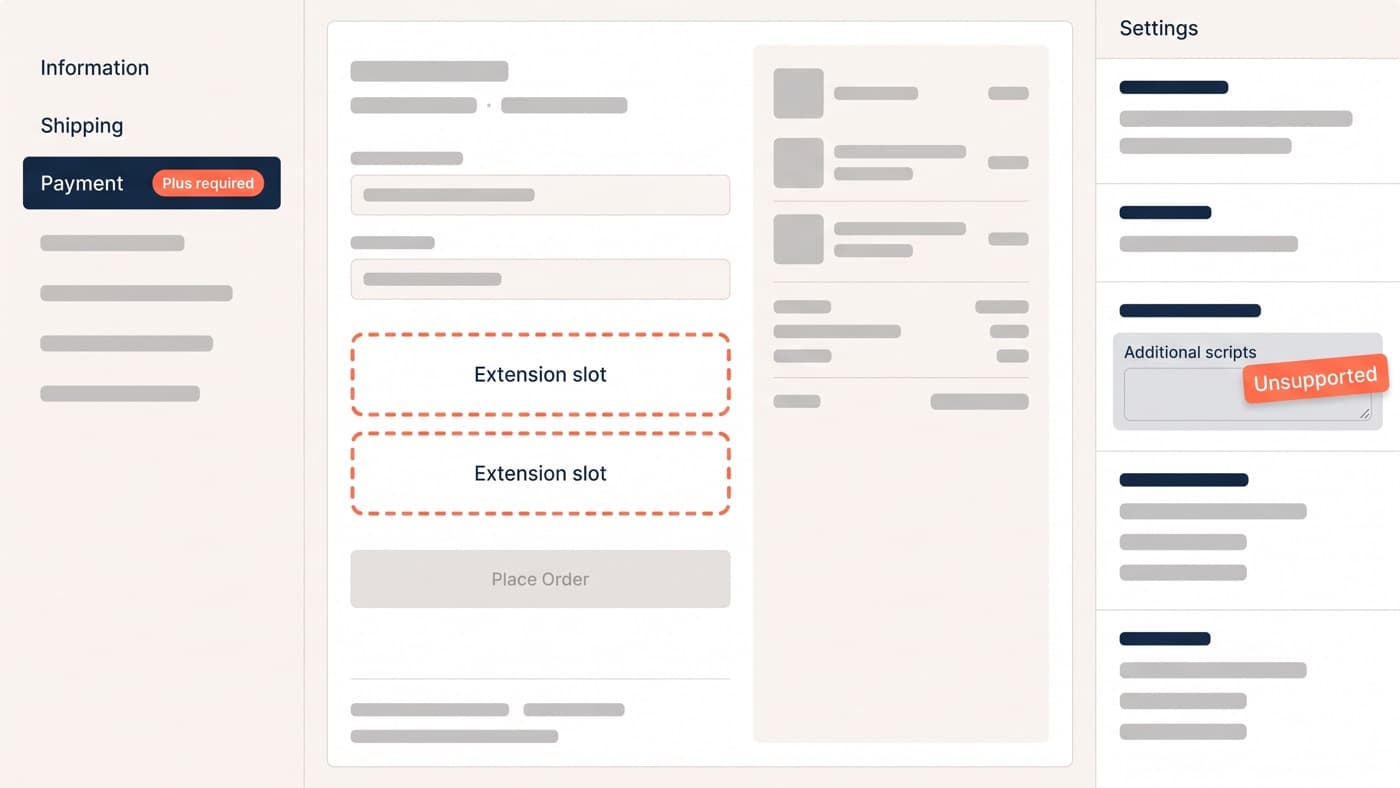
- Checkout wording is largely fixed. Outside Shopify Plus, the cancellation-instructions wording is the part you are able to edit.
That last point matters more than it reads, because a subscription checkout has to answer a question a normal checkout does not: what exactly am I agreeing to, and how do I stop. Anything you want to say there lives on the surfaces that replaced checkout.liquid, under the same plan rules.
The churn maths that decides it
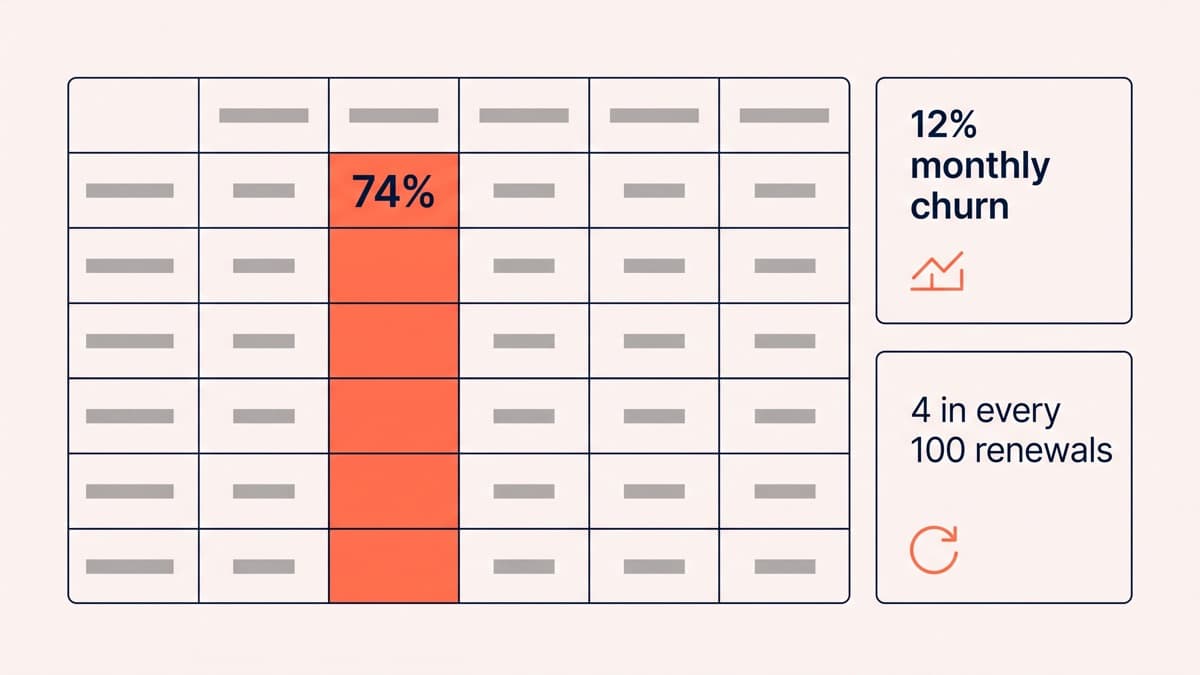
Run the arithmetic before the build, because it usually settles the argument. Take a £40 subscription order at 55 per cent gross margin, so £22 of gross profit per shipment. At 12 per cent monthly churn the average subscriber lasts a little over eight shipments and is worth about £183. Halve churn to 6 per cent and the same subscriber is worth about £367. No acquisition tactic available to you moves the number that far.
A meaningful share of that churn is not a decision at all. Cards expire, banks decline, and a renewal that fails and is never retried looks identical in the data to a customer who left. If 4 renewals in every 100 fail on the card and a retry schedule plus a plain dunning email recovers half of them, you have bought back roughly two percentage points of monthly churn, which on the numbers above is worth more than most of what a retention campaign achieves.
Measuring beyond take-rate
Take-rate is the number that gets reported and the least useful one available. The drop between the first and second shipment is the one that decides the business: a cohort holding 74 per cent into shipment two is in a different company from one holding half. Track that, then track ninety-day revenue per acquired customer against your one-time buyers, and be honest about cannibalisation, because a programme that converts loyal repeat buyers into discounted subscribers can grow every subscription metric while shrinking the account.
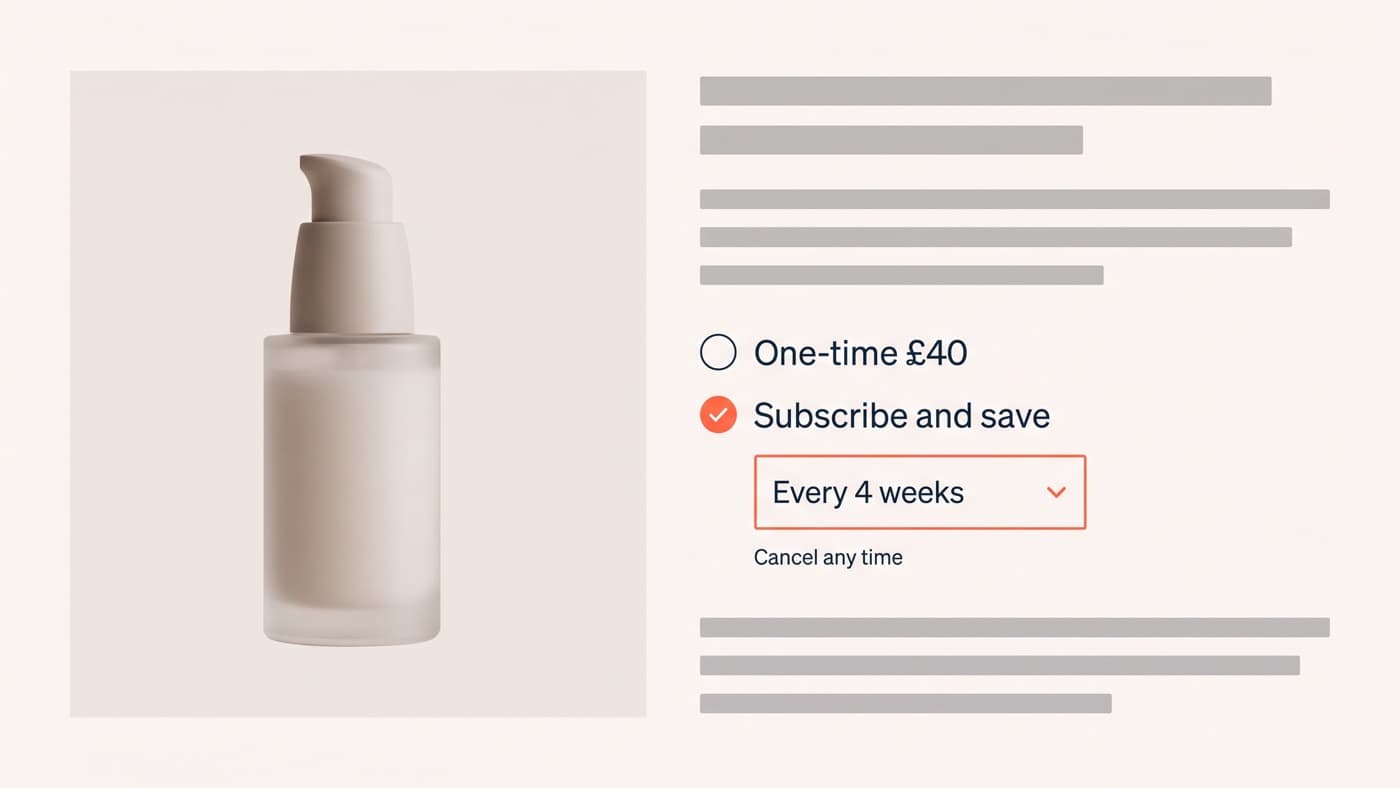
The widget on the product page is worth testing rather than installing and forgetting. Placement, the framing of save-versus-subscribe, whether the default is one-time or recurring, and how visibly you promise that cancelling is easy all move take-rate independently of anything else. Wiring subscriptions properly, and keeping the churn reporting honest afterwards, is Shopify development work rather than an app install, and if you want the fit test run against your own catalogue before you commit, get in touch.