Your store already has international traffic. The only open question is whether those visitors see a price in their own currency and an honest delivery cost, or a checkout that quietly informs them the store was not built with them in mind.
Markets is the mechanism, and the mechanism is half the job. The other half is what somebody has to believe before paying a stranger in another country. Trust as a general discipline is a subject of its own, so what follows is only the part that bites when the visitor is not local.
What Markets is, and what it is not
A market is a country or group of countries with its own currency, pricing, catalogue, domain or subfolder and language, all served from one store. One admin, one inventory, one product set. That is the entire pitch, and it is a good one, because the alternative most brands reach for first is a second store and a second set of everything that has to be kept in step by hand.
One condition is worth reading before you plan around it. Shopify’s own documentation states that only stores using Shopify Payments with access to one-page checkout can use all of the feature’s functionality, so a store on a third-party gateway should confirm what it actually gets rather than assuming the full set.
Pricing per market is a strategy, not a toggle
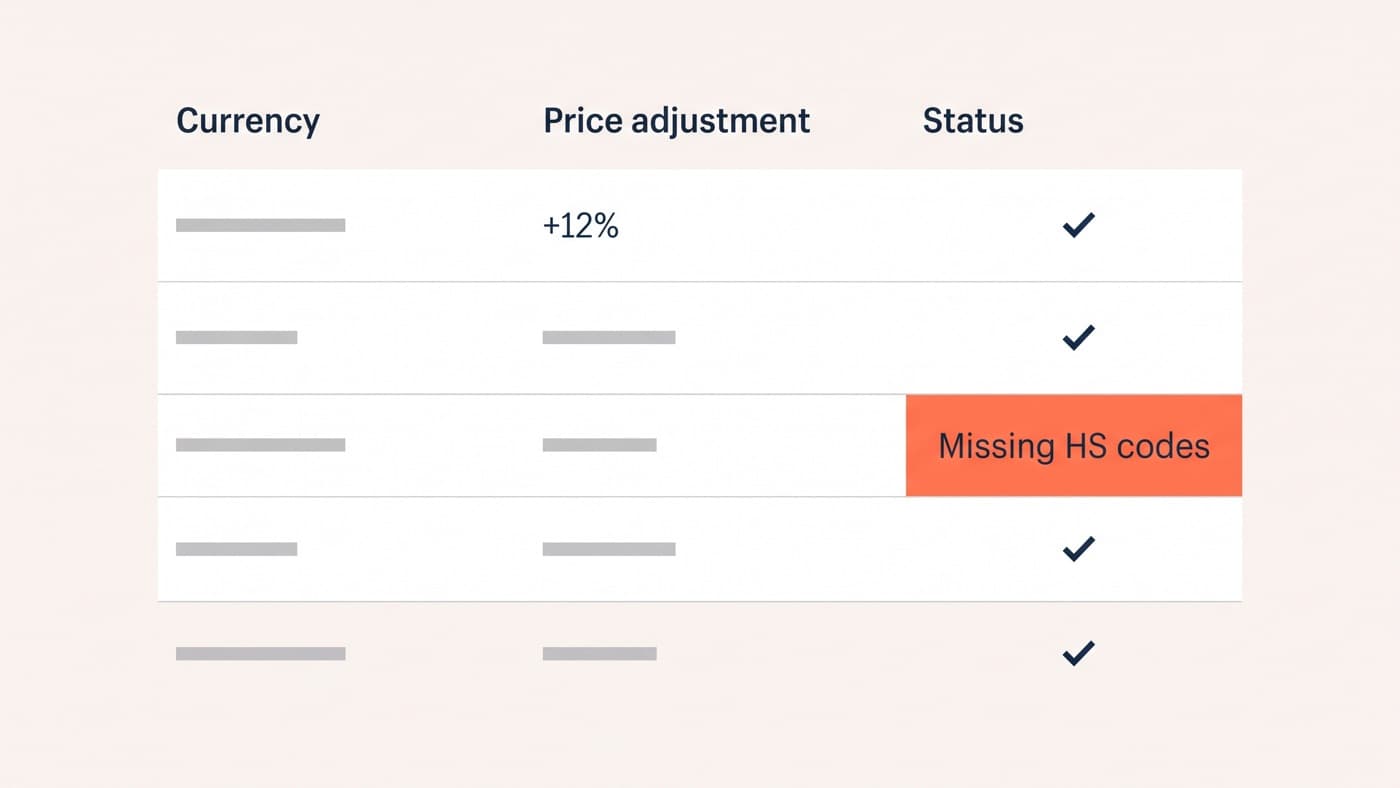
You have three levers: automatic conversion at the exchange rate, a percentage adjustment per market, and explicit prices per country. On top of those sits rounding, which exists because a converted price arriving as 24.37 in a shop window reads as a machine rather than a merchant. A market where you carry a shipping penalty and no fulfilment advantage is not a market where you should sell at the converted domestic price; a 12 per cent adjustment is a pricing decision, not an admission.
Tax display is the other half of this and it is where stores look accidentally expensive. A British or German visitor expects the tax inside the number. An American expects it added at checkout. Getting the convention backwards makes you appear roughly a fifth more expensive than you are, or produces a jump at the final step that reads as a trick.
Duties are the biggest source of international refunds
The failure runs the same way every time. The parcel arrives, the courier asks for duty plus a handling fee the customer never agreed to, the customer refuses it, the parcel comes back, and you have lost the margin, both shipping legs and the customer. Nothing on your product page caused that, and everything about it is your problem.
Shopify can calculate and collect duties and import taxes at checkout, which removes the ambush. It depends on data you have to supply: Harmonized System codes and country of origin on your products. Without them the calculation falls back to product descriptions and categories, and a confidently wrong estimate is worse than none. Carrier brokerage and disbursement fees are not part of Shopify’s calculation either, so a delivered-duty-paid promise is not automatically complete. Build them into your rates or say plainly that they are not covered.
Managed Markets, and what it costs
For merchants who would rather not own cross-border compliance, Shopify sells a managed service run with Global-e. It was marketed as Markets Pro and is now documented as Managed Markets, with Shopify’s own Markets Pro help URLs resolving to the Managed Markets pages. It guarantees duty and tax amounts at checkout, registers and remits in destination countries, adds local payment methods, and takes on restricted-item and import rules.
The price is a transaction fee: Shopify documents 3.25 per cent on the Shopify Plus plan and 3.5 per cent on Basic, Grow and Advanced, plus a 1.5 per cent currency conversion fee, on top of ordinary processing. It requires Shopify Payments and the Basic plan or higher, and it excludes several things outright, including B2B orders, checkout redirects, manual bundles and subscriptions, which remain domestic only. If recurring revenue is part of the plan, read how subscriptions actually work on the platform before assuming the programme travels with you.
Translation is a conversion problem
Shopify’s Translate & Adapt app automatically translates a maximum of two languages, and policies are never translated automatically at all. Everything beyond that is manual work or another app’s job, which is a budget question rather than a settings one. It is also a mercy, because machine-translated product copy reads as machine-translated to a native speaker and costs you trust in precisely the place you were trying to build it.
Translate the money path first and translate it properly: product pages, cart, checkout, shipping information and the returns policy. Leave the blog in English rather than being embarrassing in five languages. Nobody has ever abandoned a cart because the journal was not localised.
The international visitor’s checklist
Everything above is setup. This is what the visitor actually needs on the page before they will pay:
- A price in local currency, rounded to a number a shopkeeper would write rather than one a converter produced.
- Tax treatment stated in the convention of their country, not yours, and stated on the product page rather than discovered at checkout.
- A delivery estimate as a date range, with duties either included and said so, or named and quantified.
- A returns line that says who pays return postage from that country. This is the question most international carts actually die on.
- Local payment methods where they carry the market, because a familiar payment button is a trust signal as much as a convenience.
- Contact details and a real address, which make you a company somewhere rather than a domain nobody can place.
Measure each market as its own funnel
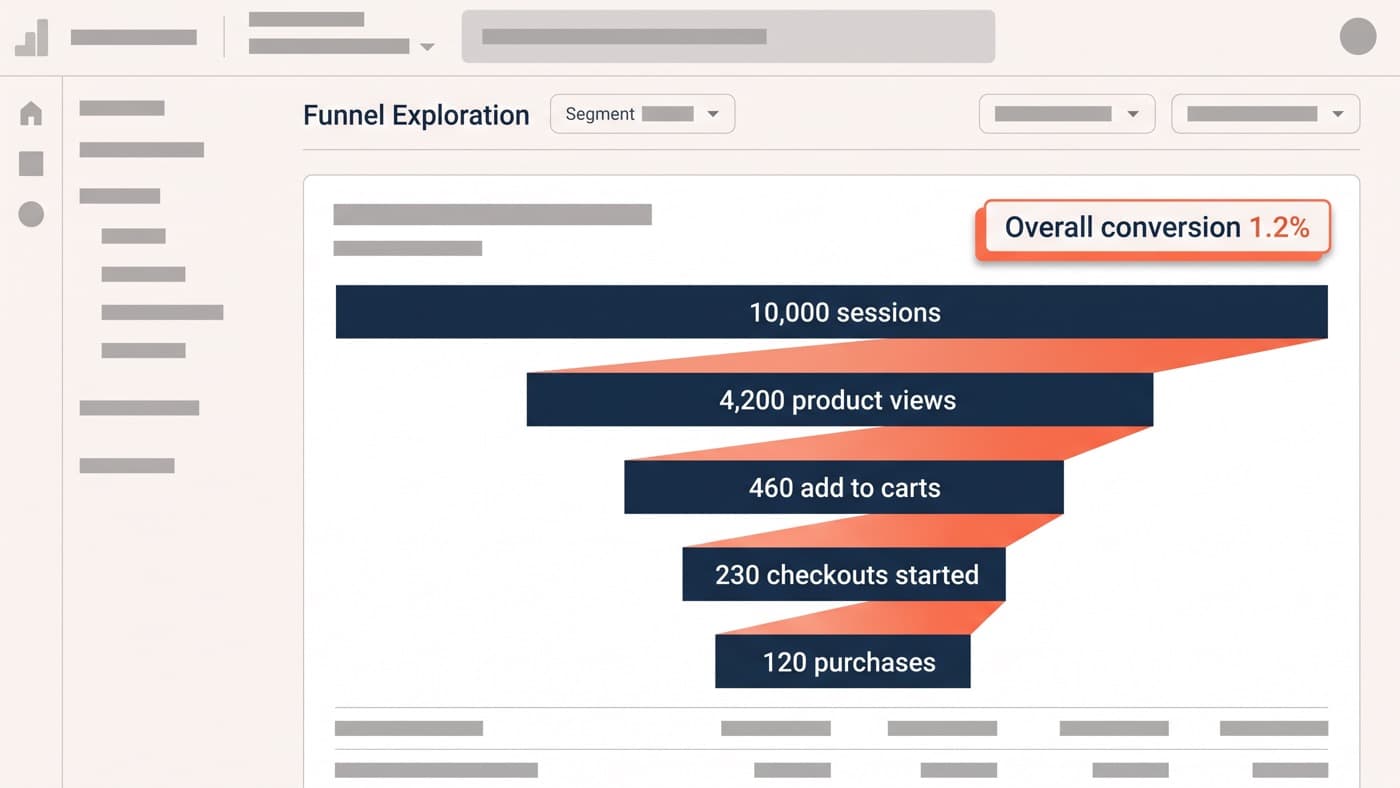
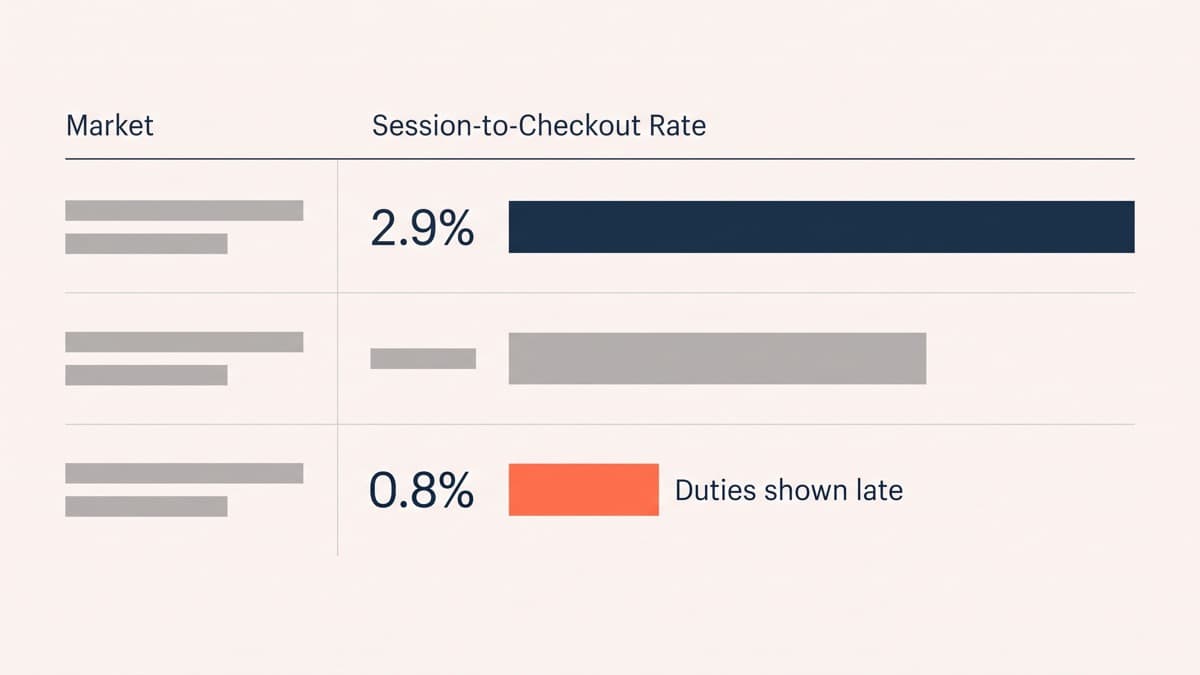
An aggregate conversion rate hides all of this. A store converting at 2.4 per cent overall might be at 2.9 per cent at home and 0.8 per cent in Germany, and that second number is not a verdict on the country. It is a defect with a name, usually a shipping cost revealed too late, a missing payment method, or a duty line that appears only after the address form. Segment every funnel report by market before drawing any conclusion, using the same funnel analysis you would run domestically.
Then treat each market as a separate optimisation queue rather than one international project. The fixes are usually small, local and specific, and they compound quietly in a line of the revenue report nobody was watching. Setting Markets up so the reporting stays honest afterwards is Shopify development work, and if your international traffic is converting at a third of the domestic rate and nobody knows why, get in touch.