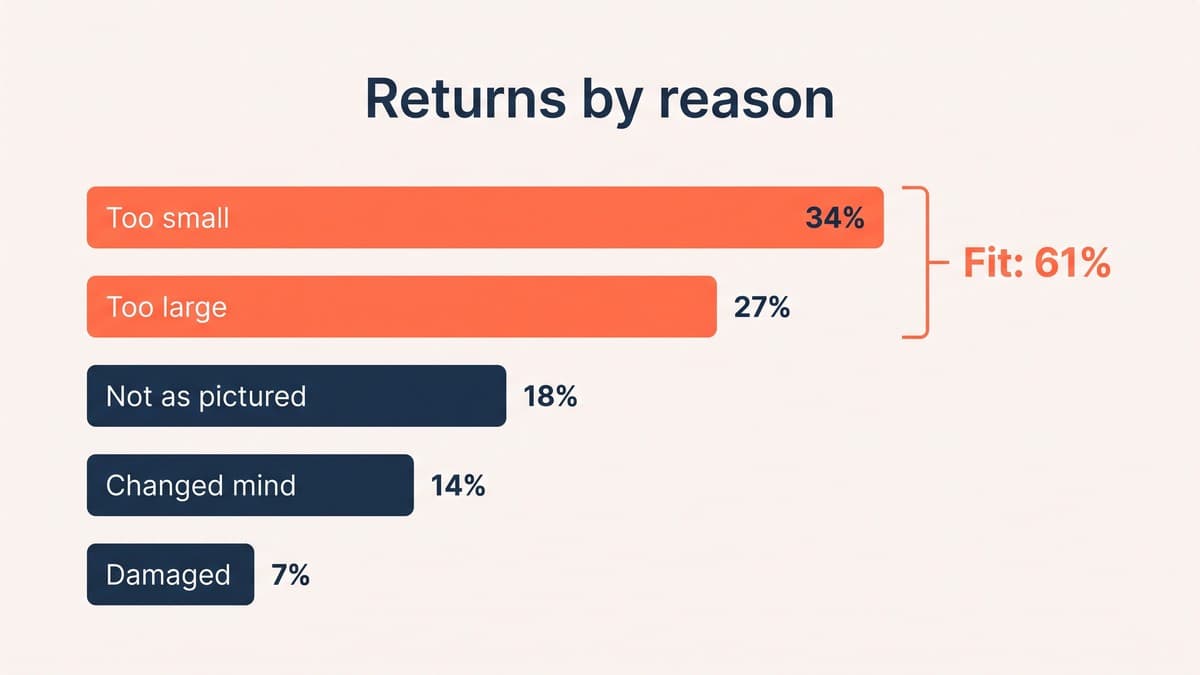
Returns are the tax you pay for a size guide nobody trusted. In apparel, somewhere between a fifth and a third of everything shipped comes back, and fit is the reason more often than every other cause combined.
The uncomfortable part is that most of those customers looked at the size guide first. They just could not act on what it told them.
A table of measurements is not guidance
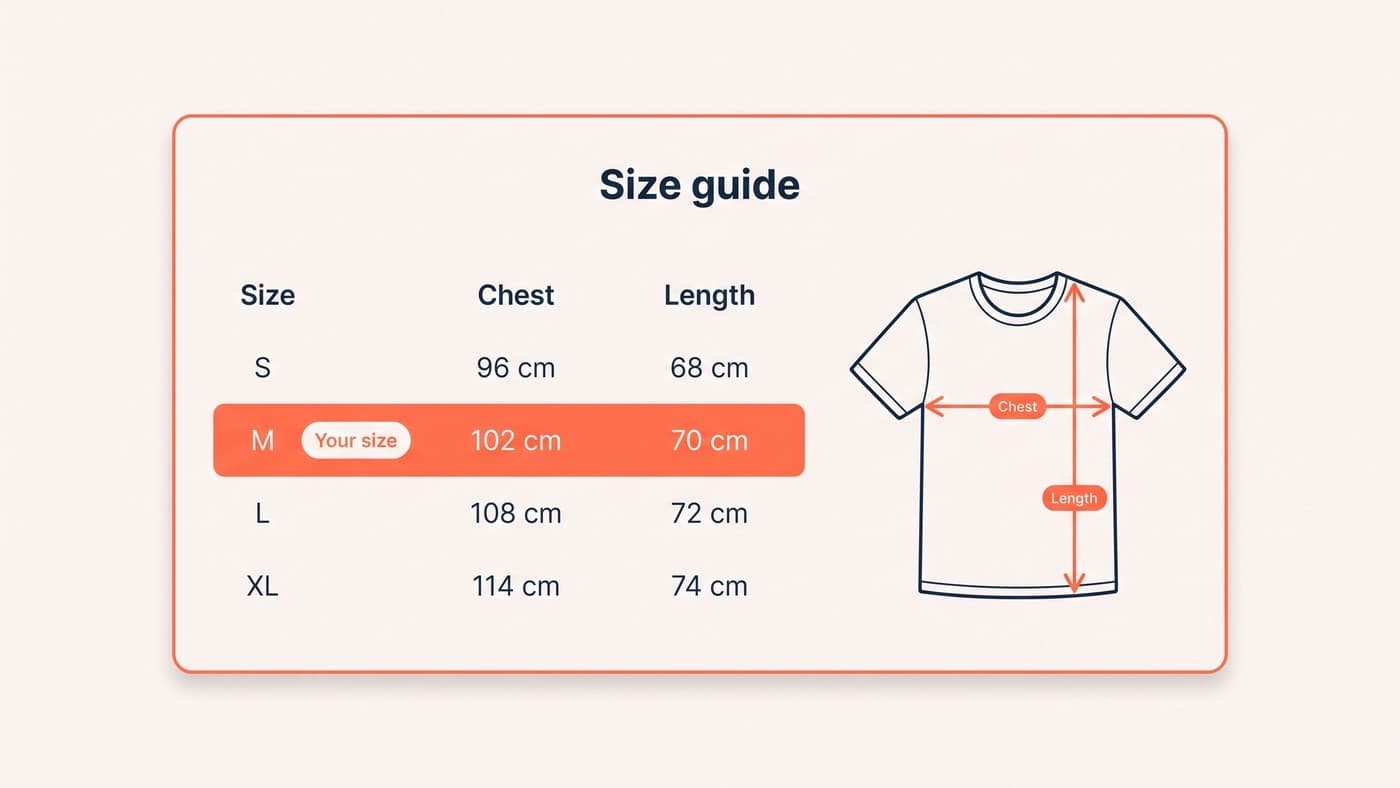
The standard size guide is a grid of chest, waist and length in centimetres. It assumes the customer owns a tape measure, knows where on their body to put it, and is willing to do that before buying a t-shirt. Almost nobody is.
What people actually do is guess, order the size they usually take, and rely on free returns as the safety net. That is a working strategy for the customer and an expensive one for you — and the cost lands in logistics, not in the marketing budget that caused it.
Compare to something they already own
The most useful size guidance skips measurement entirely and anchors to a garment the customer already has. "Fits like a classic-cut Oxford shirt" or "runs one size small, size up if you are between" answers the real question, which is not "what are my measurements" but "what should I order".
Flat-lay measurements — the garment measured on a table rather than the body it fits — work for the same reason. Anyone can lay a shirt they like flat and measure across the chest. No tape around the ribs, no guessing where the waist is.
Your returns data already has the answer
Before redesigning anything, split returns by reason and by product. The pattern is usually specific rather than general: three styles drive most fit returns, and they are the ones cut differently from the rest of the range.
Direction matters too. If a product is returned as "too small" four times as often as "too large", that product needs a "runs small" note on the page far more than the site needs a new size guide. That is a copy change, and it can ship this week.
Put it where the doubt happens
A size guide hidden in the footer is a size guide for people already determined to find it. It belongs beside the size selector, because that is the exact moment the hesitation occurs.
Open it in place rather than navigating away — losing the product page to check a measurement is a reliable way to lose the session. This is the same principle as answering the objection on the page rather than burying it, which we cover in our guide to product page design.
Photography does half the work
Fit expectations are set by the images long before anyone opens a size guide. A garment shot on a single model, pinned at the back to hang perfectly, is quietly making a promise the product cannot keep for most of the people buying it.
The cheapest fix is a caption: the model's height and the size they are wearing, on every product. It costs one line, it requires no new photography, and it converts an abstract table into something a customer can reason about — "she is my height and that is a medium" is a complete decision.
Showing the same garment on two or three different body types is better still, and increasingly expected rather than remarkable. It also reduces the second category of return, which is not fit at all but disappointment — the product arrived exactly as described and looked nothing like the photograph.
Returns policy copy is part of the guidance
There is a tension worth naming: frictionless returns raise conversion and raise return rates simultaneously. Free returns encourage bracketing — ordering two sizes intending to send one back — which is a rational customer strategy and an expensive one for you.
The answer is not to make returns harder. It is to make the right size obvious enough that bracketing stops being worth the effort. Every improvement above reduces returns by removing the uncertainty that caused the second order, rather than by punishing the customer for having it.
What actually reduces fit returns
In rough order of effort against effect:
- A "runs small" or "runs large" note on the specific products your returns data flags.
- Flat-lay measurements alongside body measurements, so nobody needs a tape around themselves.
- A comparison to a familiar garment type, in plain language.
- Model height and the size worn, on every product photograph.
- Fit feedback from reviews — "I am 178cm and the M was right" beats any table you can write.
- A fit finder that asks two or three questions, but only once the simpler things are done.
Measure the change against the specific styles you fixed, not against the site-wide return rate. Site-wide numbers move for seasonal reasons that have nothing to do with your copy, and attributing that noise to your work is how a genuine improvement gets abandoned.
Finally, be realistic about what good looks like. Fit returns will never reach zero, and chasing that number produces defensive copy that scares off buyers who would have kept the item. The goal is to remove uncertainty for people who would have bought the right size anyway, not to talk anybody out of ordering.
Review it quarterly rather than continuously. Fit problems cluster around specific styles and specific production runs, and a quarterly look is frequent enough to catch a bad batch while being infrequent enough that nobody starts chasing noise.
It is worth being clear about who owns this internally, because fit returns sit awkwardly between teams. The cost lands in logistics, the cause sits in product copy and photography, and the decision to fix it usually needs somebody in ecommerce to connect the two.
Put the returns-by-reason number in front of whoever owns the product page, monthly. Once the people writing the descriptions can see which three styles come back and why, the fixes tend to happen without anyone needing to run a project.
The first three cost almost nothing and do most of the work. The last one is where teams usually start, which is why so many stores have a fit quiz and still take returns on the same three styles every month. If you want us to look at what yours is costing, get in touch.