A publishing platform, not a blog: +71% qualified leads
- Qualified leads
- +71%
- from 214 to 366 a month
- Non-brand organic sessions
- +186%
- from 21k to 60k a month
- Non-brand keywords in the top 10
- 148
- from 19
- Median time to publish
- 2.4 days
- from 11 days
The brief
What they came to us with
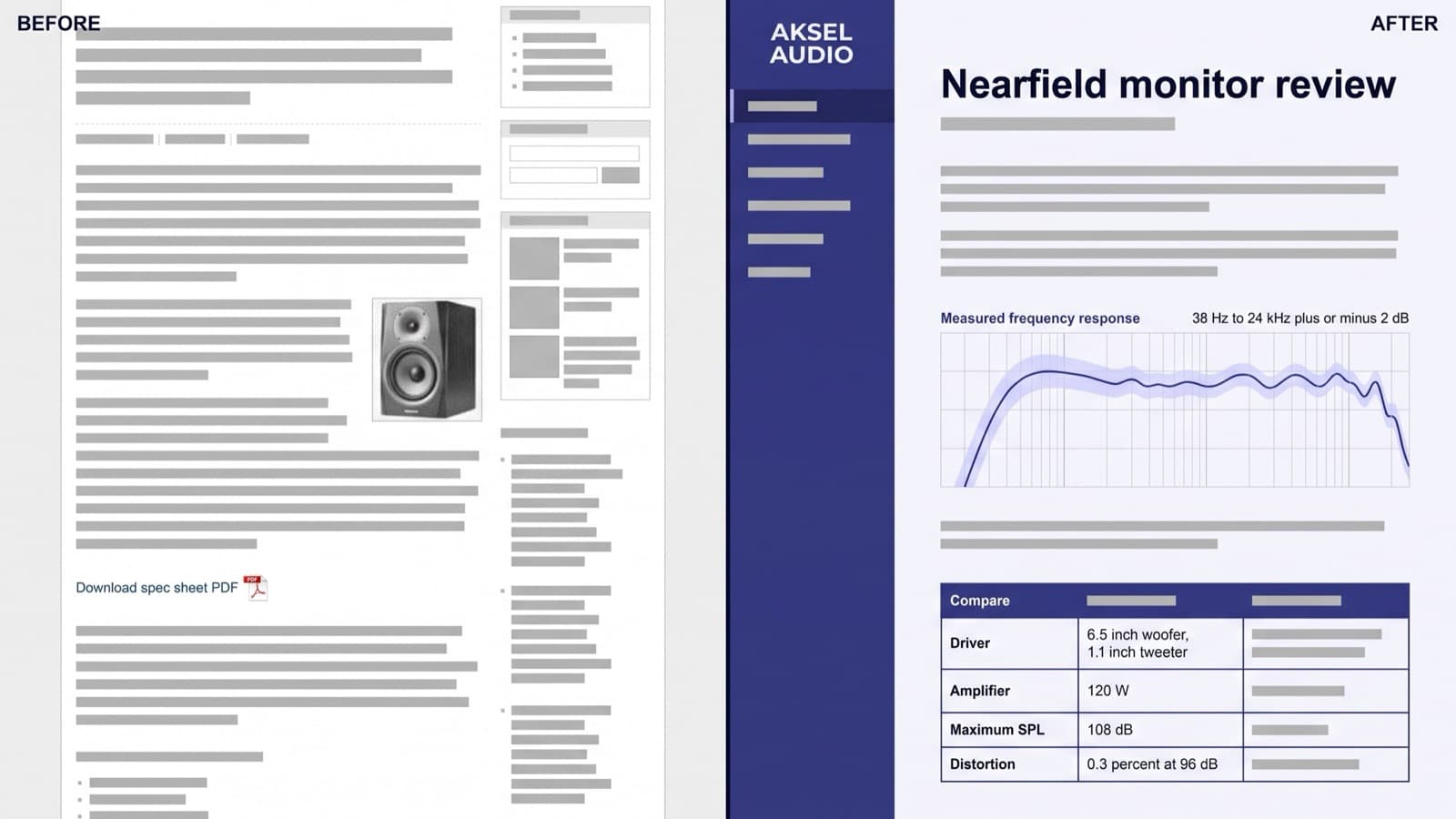
Aksel Audio builds nearfield studio monitors and a small range of passive speakers, sold direct from its own site and through about 60 specialist dealers. The engineering is genuinely good and the marketing had never caught up with it. The site was a five-year-old WordPress theme with a shop bolted on, a blog last touched in 2022, and a spec sheet per product that lived in a PDF.
The commercial problem showed up in search. For every term that mattered — "nearfield monitor for small room", "monitor calibration", anything comparative — the results were forum threads, YouTube teardowns and three competitors. Aksel ranked for its own product names and almost nothing else. Non-brand traffic was 21,000 sessions a month against a brand baseline that had not moved in two years.
What the brand had that nobody else did was measurement data and engineers willing to explain it. The brief was to turn that into a publishing operation: not a blog nobody updates, but a platform where a two-person team ships serious technical writing every week without opening a ticket.
Constraints
- Dealer channel conflict. Roughly 55% of revenue came through dealers, and any content that pushed too hard toward direct checkout risked the relationships that carried the brand.
- A two-person content team — one editor, one engineer who writes. Nothing we built could require developer time to publish.
- Source material was engineering-heavy: measurement exports, distortion plots and CAD sections. It had to become readable without being dumbed down.
- Slow feedback loops. SEO changes take one to three months to register, so the roadmap had to be committed to well before it could be judged.
The approach
How we worked the problem
We treated this as a platform build with an editorial programme attached, not a content retainer. The first eight weeks produced almost no published articles and all of the machinery that made the next fifty weeks cheap.
- 01
Model the measurements once, reuse them everywhere
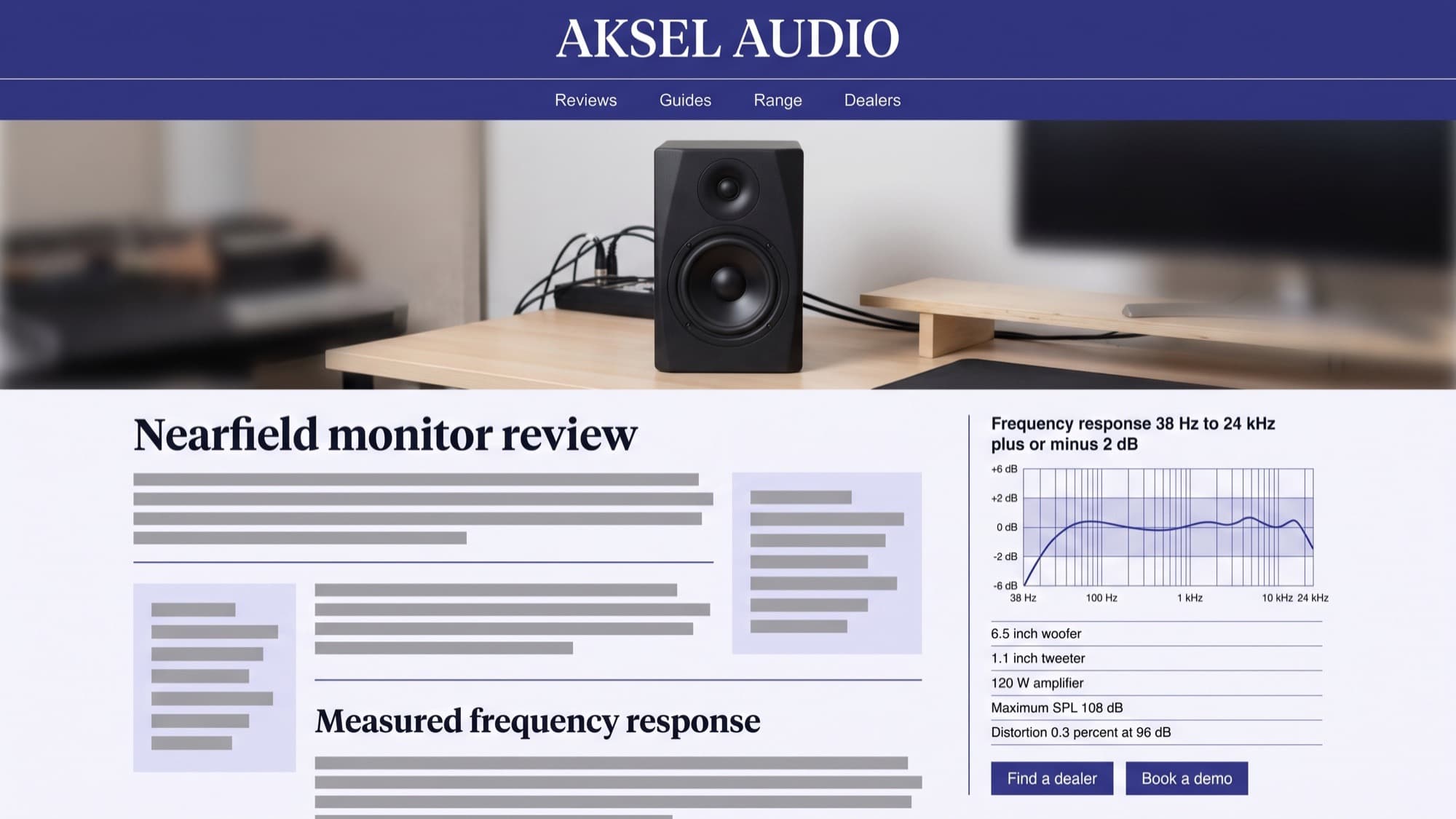
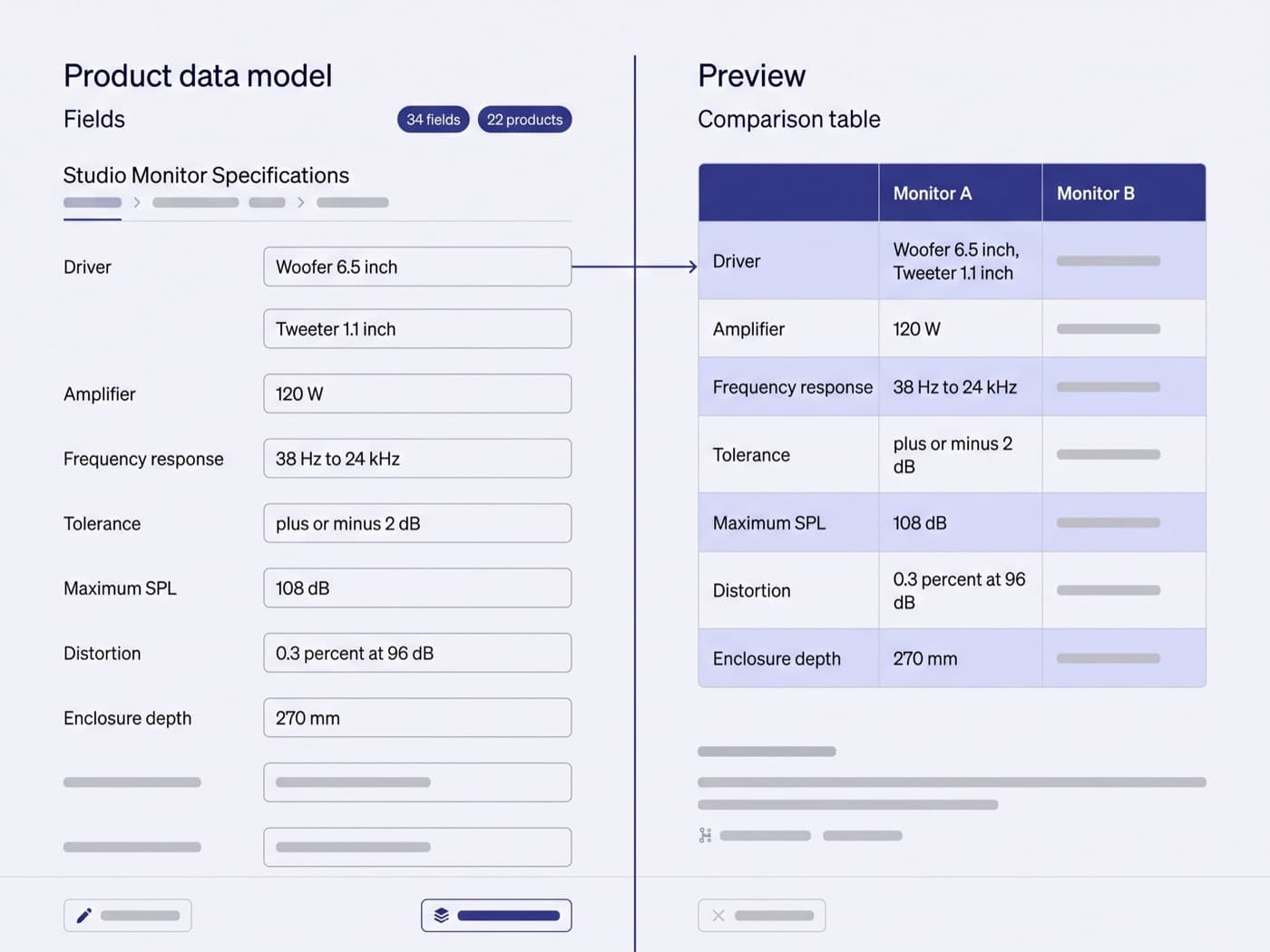
Every monitor has the same underlying facts: driver sizes, amplifier power, frequency response window, maximum SPL, distortion at three levels, enclosure dimensions. We put those into a single ACF-backed data model attached to the product, not into the body of any article.
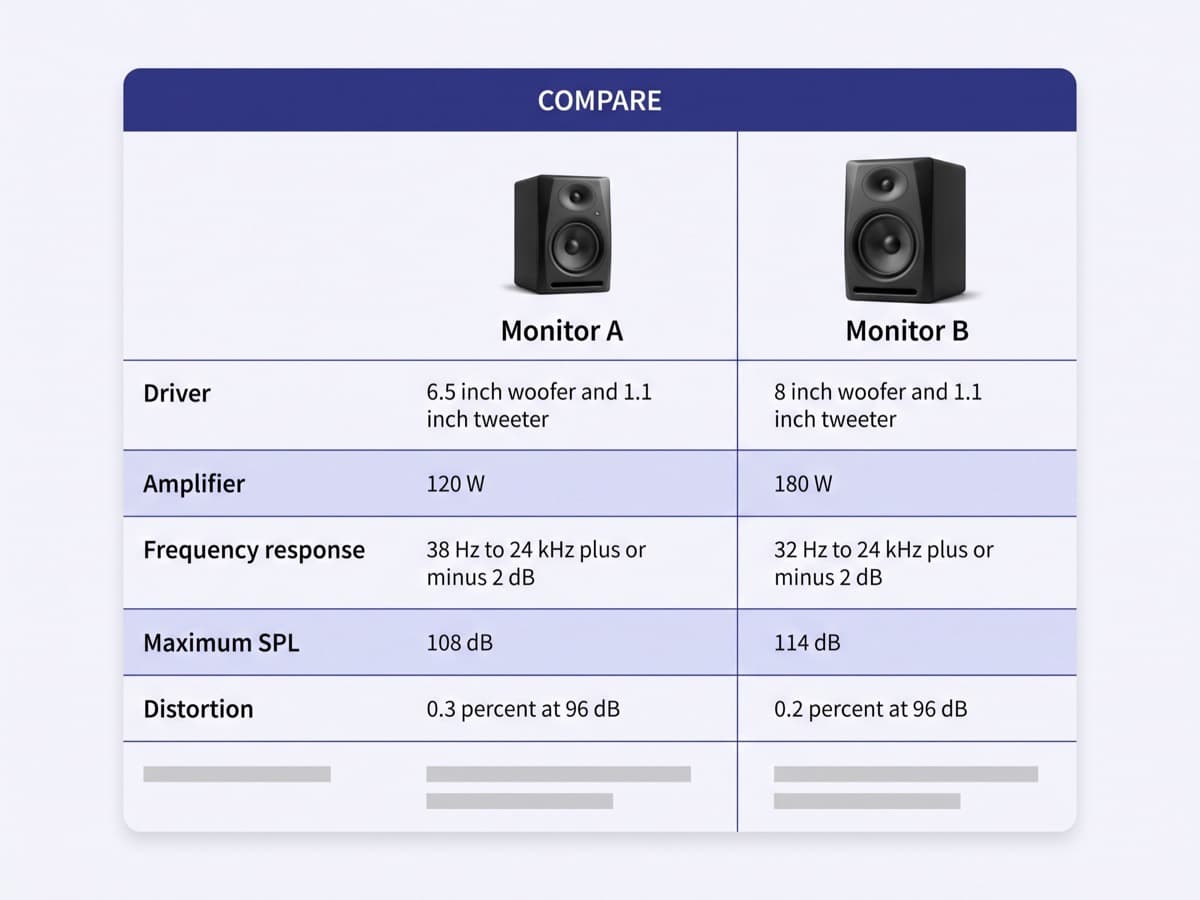
That one decision is why the comparison tables, the spec blocks inside reviews, the filterable range page and the structured data all agree with each other. Correct a distortion figure in one field and eleven pages update. Before this, the same number lived in four PDFs and disagreed with itself in two of them.
- 1 product data model, 34 fields, 22 products migrated
- Spec blocks, comparison tables and range filters read the same source
- Product schema generated from the model, not hand-written
- 02
Build block patterns so the editor never needs a developer
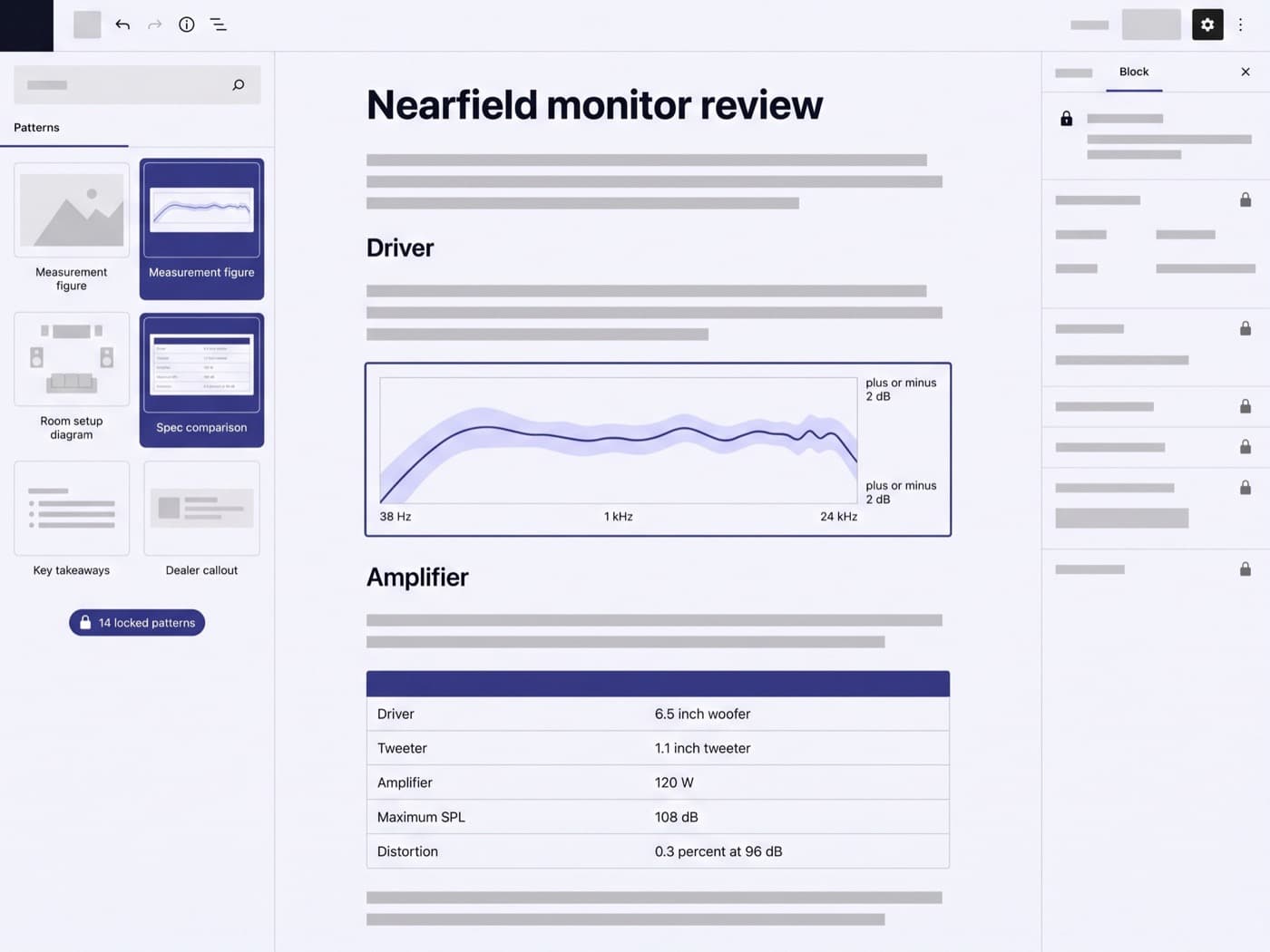
Fourteen locked block patterns cover everything the team publishes: measurement figure with caption, A-versus-B spec table, room-setup diagram, pull-quote from an engineer, dealer callout, key-takeaways box. Each one is registered with a fixed structure, so an editor can fill it but cannot break the layout or invent a new heading level.
The test we set ourselves was that the editor should be able to build any of the first twenty articles from the patterns alone. Two needed a new pattern. We built those, and nothing since has required us.
- 14 locked patterns, 0 developer tickets to publish
- Editorial style guide bound to the patterns, not a separate PDF
- Median time to publish fell from 11 days to 2.4
- 03
Build an internal linking architecture, then a calendar
Four hubs — room acoustics, monitor selection, calibration and measurement literacy — each with eight to twelve supporting articles, each supporting article linking up to its hub and across to two siblings. Product pages sit at the bottom, linked from the articles that earn their way to them, never the other way round.
Cadence was two long-form pieces and one short explainer a week, held for fifty weeks. Consistency mattered more than volume: we published fewer words in year one than the team had originally planned, and more of them ranked.
- 4 hubs, 41 supporting articles, 96 editorial links placed by rule
- 3 pieces a week, held for 50 weeks
- Every article assigned one primary non-brand term before drafting
- 04
Separate brand demand from the demand we actually created
Content attribution is where these programmes get oversold, so we drew the line early. Brand queries were excluded from the reporting set entirely, and leads were split by whether the first session landed on an editorial URL with a non-brand entry query.
That gives an honest read on the assisted path, and we were explicit about its limits: we cannot prove what the dealer-referred leads read before they walked into a shop, and we cannot separate content from the reputation the engineering already had. What we can show is that non-brand landing pages went from 4% of lead-touching sessions to 39%.
- Brand terms excluded from the reported keyword and session set
- Lead quality scored by HubSpot fit, not form fills
- Assisted conversions reported separately from last-click
The log
Platform and editorial log
Fourteen months of milestones and tests. Six that mattered, with the relative change in qualified leads from the affected pages.
- 01
Measurement data model and spec blocks
Because specifications lived in PDFs and disagreed across pages, a single product data model rendered inline will raise time on page and downstream enquiries.
- 02
Comparison tables on every review
Because comparative queries drive most non-brand search in this category, an A-versus-B spec table will win featured snippets and raise assisted conversions.
- 03
Hub-and-spoke internal linking rollout
Because supporting articles were orphaned, rule-based linking to four hubs will lift non-brand rankings across the cluster.
- 04
Gated measurement PDF on calibration articles
Because calibration content attracts the most engaged readers, gating a measurement handbook behind a form will raise captured leads.
- 05
Dealer locator promoted above the direct buy button
Because dealers carry over half of revenue, leading with the locator on article CTAs will raise total qualified enquiries without cannibalising direct.
- 06
Dual-path CTA: book a demo or find a dealer
Because the two channels serve different buyers, offering both paths side by side will raise qualified leads across direct and dealer together.
- Measurement data model and spec blocks+12.6%96%shipped
- Comparison tables on every review+18.3%97%shipped
- Hub-and-spoke internal linking rollout+9.1%95%shipped
- Gated measurement PDF on calibration articles-6.8%95%not shipped
- Dealer locator promoted above the direct buy button+0.7%flatnot shipped
- Dual-path CTA: book a demo or find a dealer+14.2%98%shipped
| Experiment | Relative change | Confidence | Shipped |
|---|---|---|---|
| Measurement data model and spec blocks | +12.6% | 96% | Yes |
| Comparison tables on every review | +18.3% | 97% | Yes |
| Hub-and-spoke internal linking rollout | +9.1% | 95% | Yes |
| Gated measurement PDF on calibration articles | -6.8% | 95% | No |
| Dealer locator promoted above the direct buy button | +0.7% | flat | No |
| Dual-path CTA: book a demo or find a dealer | +14.2% | 98% | Yes |
The results
What it moved
Twelve months after launch, qualified leads are up 71% — 214 a month to 366 — and 39% of lead-touching sessions now start on an editorial page from a non-brand query, against 4% at the start. Non-brand organic sessions nearly tripled and 148 non-brand keywords sit in the top 10, up from 19.
The channel tension resolved in a way we did not predict. Promoting the dealer locator over the direct buy button did nothing measurable on its own. Offering both paths side by side raised both: direct enquiries grew, and tracked dealer referrals from the site went from 41 a month to 118. Dealers stopped treating the content programme as competition once they could see it sending people to them by name.
What we cannot prove is the part the client cares about most: whether the writing is why the brand now gets taken seriously in rooms it was not invited to before. Non-brand demand is measurable. Reputation is not, and we have not pretended otherwise.
The platform is the durable asset. The content team publishes three pieces a week without us, and the last developer ticket raised against the editorial stack was in month six.
- Qualified leads a month+71%214366
- Non-brand organic sessions a month+186%2100060100
- Dealer referrals a month+188%41118
- Time to publish an article-78%lower is betterdays11days2.4
| Metric | Before | After |
|---|---|---|
| Qualified leads a month | 214 | 366 |
| Non-brand organic sessions a month | 21000 | 60100 |
| Dealer referrals a month | 41 | 118 |
| Time to publish an article | days11 | days2.4 |
| Period | Qualified leads |
|---|---|
| M1 | 214 |
| M2 | 209 |
| M3 | 218 |
| M4 | 231 |
| M5 | 246 |
| M6 | 258 |
| M7 | 271 |
| M8 | 289 |
| M9 | 304 |
| M10 | 312 |
| M11 | 331 |
| M12 | 366 |
“The editorial platform moved us upmarket. Qualified leads are up 71% and the content team runs it all themselves.”